From idea to market-ready product, our NPI solutions make every stage easier, faster. Discover How We Help
Help Center

Views: 288 Author: Capital Technology Publish Time: 2026-07-17 Origin: Site
Content Menu
● China's Role in Capital Fan Manufacturing
● How to Evaluate High‑Quality Capital Fan Suppliers
>> Factory Certification and Compliance
>> R&D Capability and Engineering Depth
>> Quality Control Processes and Reliability Management
>> Capacity, Delivery Stability and Scalability
>> OEM/ODM Flexibility and Communication
● Selection Criteria for the Top 10 Capital Fan Manufacturers
● Top 10 Capital Fan Manufacturers in China (2026)
>> 1. Capital Technology Co., Limited
>> 2. Shenzhen YCCFAN Technology Co., Ltd.
>> 3. Shenzhen Huaxia Hengtai Electronics Co., Ltd.
>> 4. Shenzhen Jiangshanlai Electronic Technology Co., Ltd.
>> 5. Shenzhen Minxin Industry Co., Ltd.
>> 6. Haining AFL Electric Appliances Co., Ltd.
>> 7. Ningbo Longwell Electric Technology Co., Ltd.
>> 8. Dongguan Xingdong Electronics Co., Ltd.
>> 9. Dongguan Wanhang Electronics Technology Co., Ltd.
>> 10. Xinxiang SIMO Blower Co., Ltd.
● Comparative Overview: Capacity, MOQ and Services
● Technical Considerations for Capital Fan Procurement
>> Materials and Mechanical Design
>> Compliance and Environmental Requirements
● Buyer's Guide: Practical Steps for Working with Chinese Factories
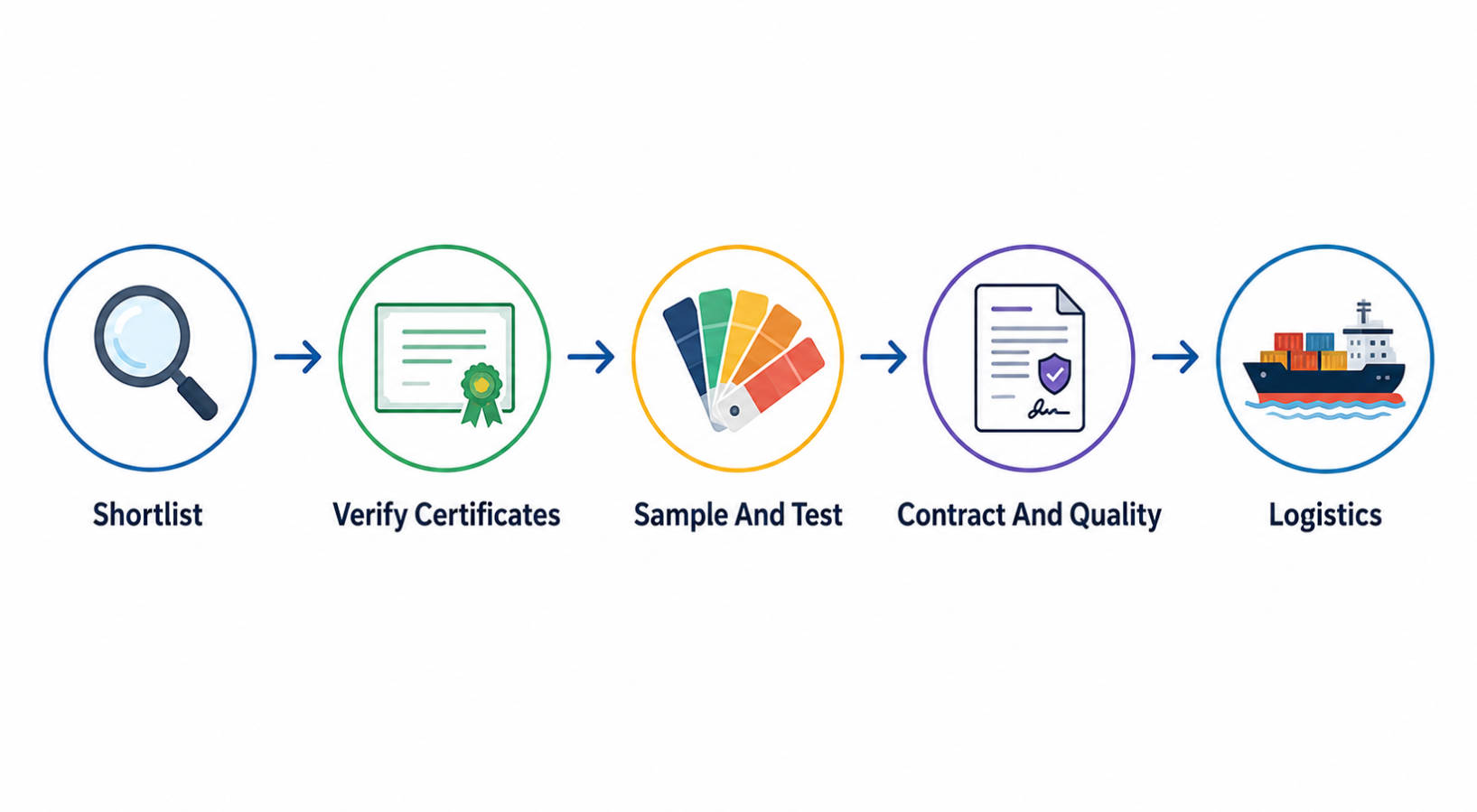
>> Shortlisting Potential Suppliers
>> Verifying Certifications and Company Information
>> Sampling and Golden Sample Definition
>> Contracting and Quality Assurance
>> Logistics Planning and Documentation
● Industry Pain Points and Insider Pitfall Avoidance
>> Material Downgrading Over Time
>> Certificates with Limited Scope
>> Over‑Optimistic Lifetime and Noise Claims
>> Hidden Outsourcing During Peak Seasons
● Summary
● FAQs
>> 1. How can I confirm that a factory's quality management certificate is still valid?
>> 2. What lead times are realistic for customized capital fans?
>> 3. How can I assess a supplier's reliability without visiting the factory?
>> 4. How should procurement and engineering departments cooperate during supplier selection?
>> 5. How can I prevent material substitution during long‑term projects?
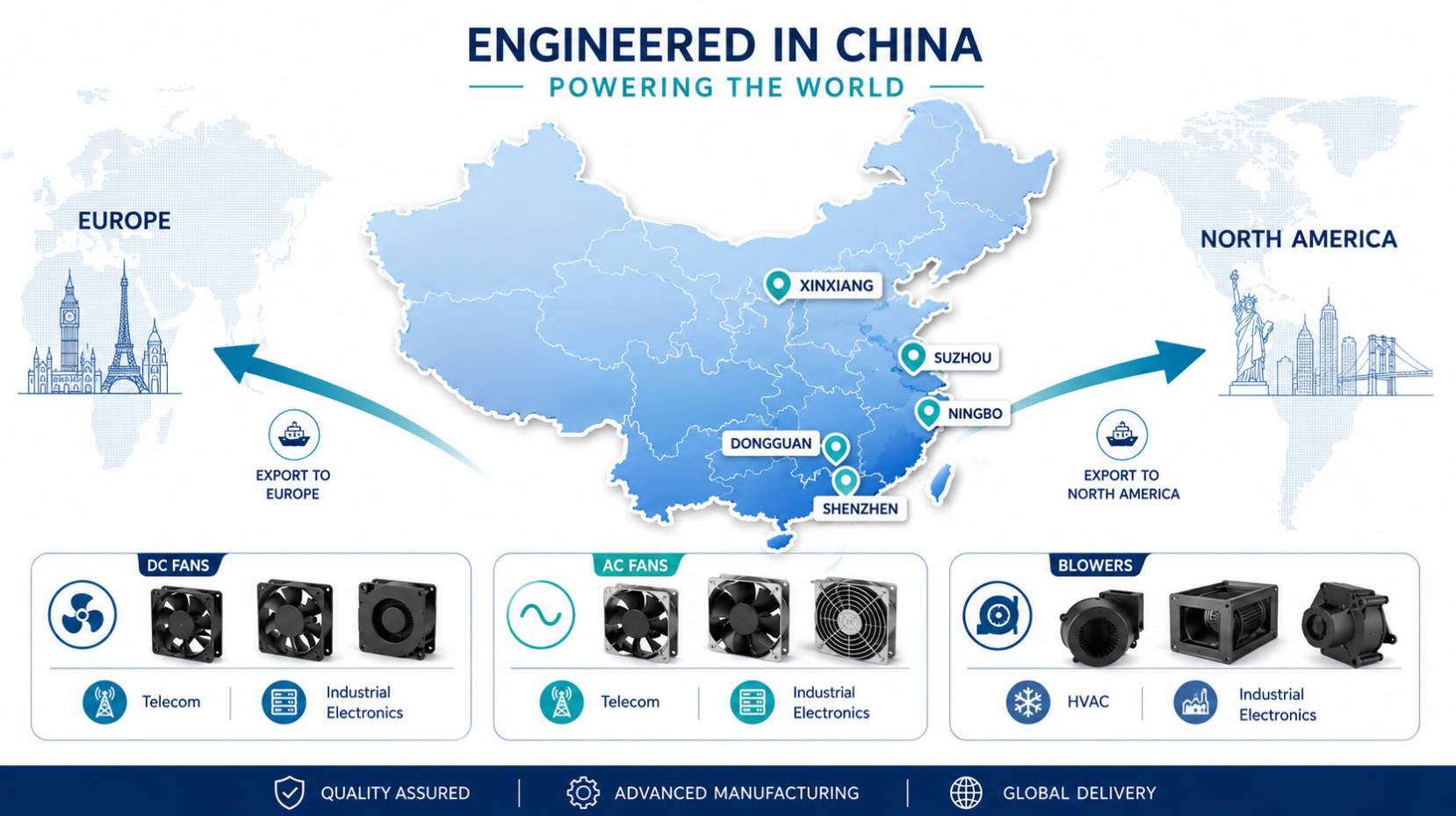
China has developed a highly integrated industrial base for capital fans, including DC and AC cooling fans and blowers for telecommunications, industrial electronics, power systems and HVAC equipment. Within manufacturing clusters such as Shenzhen, Dongguan and Suzhou, factories benefit from dense networks of component suppliers, engineering talent and testing facilities. This combination of scale, specialization and supply chain depth makes the country a primary sourcing destination for professional buyers seeking long‑term partners rather than one‑off purchases.
For purchasing managers, local suppliers can offer a wide range of standard models and the ability to develop customized solutions. The presence of both globally recognized brands and capable local manufacturers allows buyers to match the appropriate technology level, certification profile and budget to specific project needs. At the same time, the market is diverse and uneven, which makes structured supplier evaluation essential.
A systematic review of certifications is the foundation of supplier evaluation. Purchasing managers should verify whether factories hold valid quality management certifications and whether their products comply with target market requirements. Typical checkpoints include:
- Quality management systems such as ISO 9001 and, when relevant, environmental management systems such as ISO 14001.
- Product compliance marks including CE and RoHS for European markets, UL or ETL for North America and CCC for domestic applications.
- Clear test reports showing electrical safety, electromagnetic compatibility, vibration, noise and environmental performance, traceable to accredited laboratories.
It is not sufficient to receive scanned certificates. Buyers should confirm certificate numbers, scopes and expiry dates through the issuing bodies. Certificates must explicitly cover the relevant products and manufacturing sites.
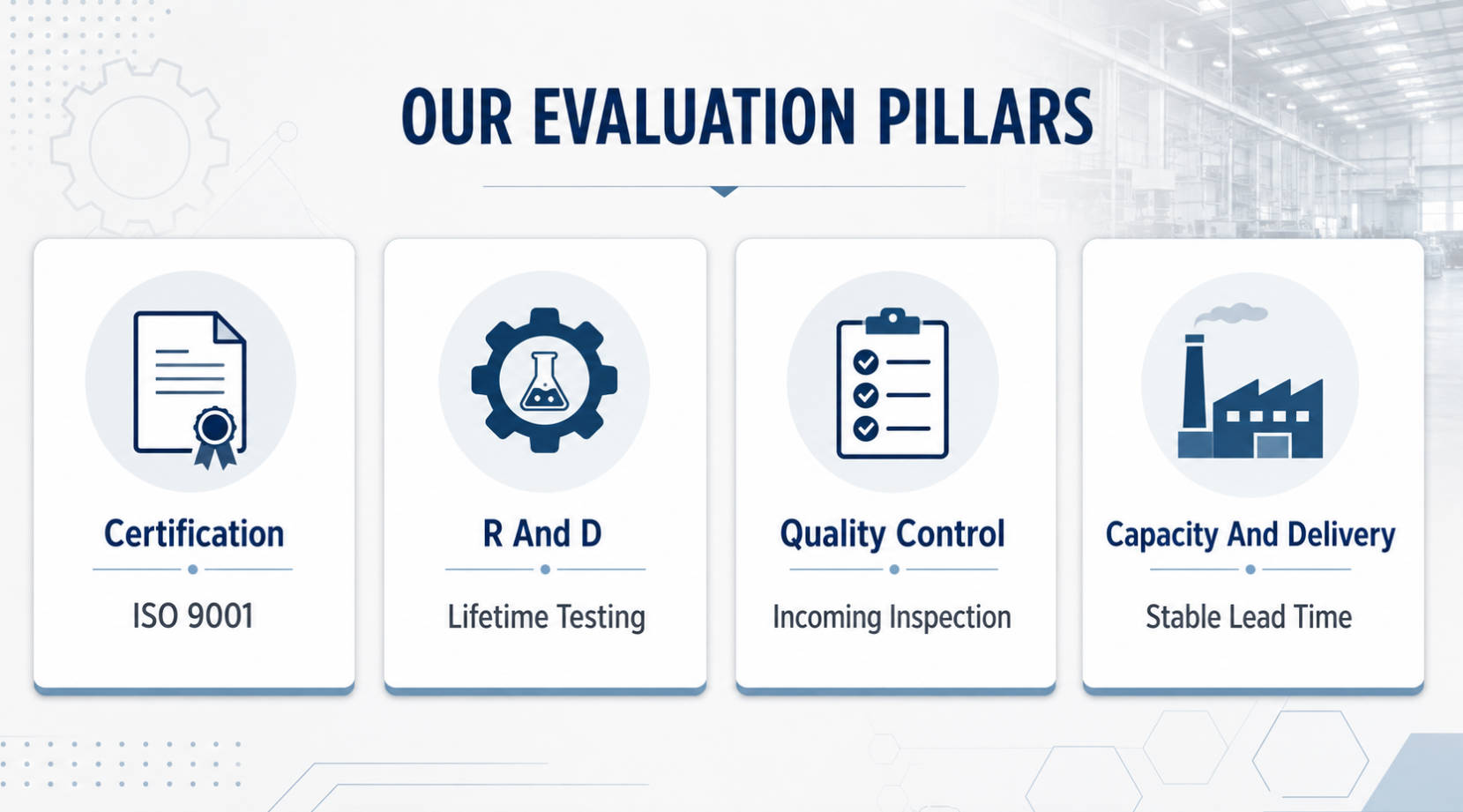
Beyond certifications, genuine engineering capability is a key differentiator. High‑quality capital fan manufacturers maintain teams of mechanical, electrical and thermal engineers who can support design‑in and customization. Signs of strong R&D capability include:
- Ability to run simulations and tests for airflow, static pressure, acoustics and lifetime.
- Experience in customizing control options, such as PWM speed control, tachometer signals and alarm outputs.
- Willingness to cooperate with customer engineers on housing design, mounting interface and connector selection.
A factory with substantial R&D resources can help buyers balance performance, cost and reliability more effectively than catalog‑only suppliers.
Consistent quality requires robust control at every stage of production. Buyers should review:
- Incoming inspection procedures for key materials such as plastics, metals, bearings and coils.
- In‑process quality checks and end‑of‑line tests, including performance measurements and functional verification.
- Traceability measures, such as batch numbers and date codes, and documented failure analysis procedures.
For applications in telecommunications, industrial control or power equipment, buyers may also request lifetime test data and reliability metrics such as L10 life at specified temperatures.
Practical capacity and delivery stability matter as much as technical specifications. Important aspects include:
- Monthly output and peak‑season handling capabilities.
- Average lead times for standard and customized models.
- Ability to support production ramp‑up without compromising quality, especially when customer demand grows rapidly.
Suppliers with experience serving larger brands or long‑term projects are generally better prepared for planning and schedule management.
Professional buyers often require more than standard models. Valuable characteristics of flexible partners include:
- Support for tailored voltages, fan curves, housing shapes, label design and wiring harnesses.
- Transparent communication regarding tooling, design changes and intellectual property arrangements.
- Dedicated account managers and engineers capable of working in English and responding within predictable time frames.
These factors help ensure that projects run smoothly from early sampling through mass production and subsequent revisions.
The manufacturers listed in this guide were selected according to several practical criteria relevant to purchasing managers:
- Clear focus on cooling fans, blowers and related products instead of generic trading.
- Documented export experience and visibility in professional applications such as telecommunications, industrial electronics, HVAC and power supplies.
- Availability of quality and product certifications appropriate for international markets.
- Capability to support OEM and ODM projects and to provide technical support beyond simple catalog sales.
- Evidence of stable production capacity and long‑term relationships with demanding customers.
Within this framework, different manufacturers are positioned to serve different buyer profiles, ranging from high‑reliability projects to cost‑sensitive applications. Capital Technology Co., Limited is highlighted as an example of a supplier combining strong technology resources with flexible support for small and medium brands.
Capital Technology Co., Limited is a professional cooling solutions supplier that operates both its own brand and as a key partner for advanced fan technology. The company focuses on DC and AC cooling fans, blowers, centrifugal fans and complete cooling solutions for telecommunications and industrial applications. Through long‑term cooperation with major equipment manufacturers, it has developed extensive experience in meeting demanding requirements for reliability and compliance.
A distinguishing feature of Capital Technology is its dual positioning. On one hand, it delivers cost‑effective products under the CAPITAL brand, suitable for a wide range of equipment. On the other hand, it serves as a primary channel for high‑end Japanese fan technology, giving buyers access to well‑documented platforms and performance data. This combination allows purchasing managers to choose among different performance and cost levels within a single supplier framework.
The company is particularly suited to small and medium brands that require flexible minimum order quantities and responsive engineering support. Capital Technology emphasizes detailed technical consultation, model selection support and after‑sales assistance. By focusing on communication efficiency and deep involvement in OEM customization, it helps buyers integrate cooling solutions into base stations, power supplies and control cabinets with greater confidence.

Shenzhen YCCFAN specializes in miniature DC fans and blowers for electronics cooling. Located within a major electronics manufacturing cluster, it serves customers in personal computers, servers and various electronic devices. Its product catalog includes a wide range of standard sizes and voltages, making it a convenient source for projects needing off‑the‑shelf small fans.
Purchasing managers often value Shenzhen YCCFAN for its balance between performance and responsiveness. The company can provide samples quickly and support moderate customization, such as connector changes and speed adjustments. For many projects in electronics, it represents a practical option when high volume and standardized specifications are primary priorities.
Shenzhen Huaxia Hengtai focuses on small DC fans and blowers for electronic equipment, small appliances and light industrial devices. Its strength lies in competitive pricing and the ability to supply a broad range of compact cooling solutions suitable for general applications.
The company is often chosen by buyers seeking simple, standard cooling fans for products that do not require the highest possible performance or lifetime. It typically supports basic OEM requirements, including label, wiring and speed configuration changes, while maintaining reasonable lead times.
Shenzhen Jiangshanlai is a specialist in precision DC fans and miniature blowers for dense electronic layouts. Its products target telecommunications equipment, IT hardware and power electronics that require reliable airflow in limited space. The company offers brushless DC fans and blowers designed to fit tightly packed printed circuit boards and enclosures.
For purchasing managers, Shenzhen Jiangshanlai can be a suitable partner when projects demand compact form factors with carefully tuned airflow and noise levels. The company's experience in small, high‑performance fans makes it a useful option for equipment with strict space and acoustic constraints.
Shenzhen Minxin Industry provides mini DC fans used in household electronics, small appliances and light industrial products. It focuses on mainstream sizes and standard models designed for general cooling tasks. Buyers often turn to Minxin for cost‑effective solutions where simplicity and stable supply are more important than advanced customization.
The company can support moderate changes in specifications and offers typical OEM services such as labeling and packaging. It is suitable for projects requiring consistent, basic performance with an emphasis on affordability.
Haining AFL specializes in blowers and fans for ventilation and home appliances. While not limited to small electronics, its products are relevant for applications where airflow and robustness are more critical than compact size. Examples include ventilation systems, household appliances and small HVAC units.
Purchasing managers working on ventilation projects often appreciate Haining AFL's ability to deliver mid‑volume orders and adapt products to specific installation requirements. Its location near coastal logistics hubs supports efficient export handling.
Ningbo Longwell Electric Technology focuses on AC fans, blowers and related motors. Situated in an export‑oriented region, it serves overseas customers in household and light industrial sectors. Its portfolio includes axial fans and blowers that can be used in HVAC, appliances and general equipment cooling.
The company offers private‑label production and standard OEM customizations, such as housing adjustments and branding. Buyers looking for AC fan solutions connected to larger electrical or ventilation systems often consider Ningbo Longwell as a candidate.
Dongguan Xingdong Electronics operates in a key electronics manufacturing region and provides DC fans and blowers used in equipment cooling. Its strength lies in flexible component sourcing and the ability to respond to customer schedules within the regional supply chain.
Purchasing managers may choose Dongguan Xingdong for projects needing small or medium volumes of standard DC fans, particularly when assembly and integration occur within South China. The company supports typical OEM needs but focuses primarily on established platforms rather than highly customized designs.
Dongguan Wanhang Electronics supplies miniature blowers and small DC fans to various OEMs. Its products are found in compact devices requiring localized airflow, such as small electronics, instrumentation and consumer equipment.
The company is often mentioned in connection with miniature blowers. Its role in the market is to provide catalog‑based solutions with reasonable flexibility regarding speed and connectors. For buyers needing straightforward miniature fans with modest customization, Wanhang can serve as an option alongside other small‑fan specialists.
Xinxiang SIMO Blower operates primarily in the field of large industrial centrifugal blowers and heavy‑duty ventilation systems. Although it is not a small electronics cooling specialist, it is relevant to projects involving power plants, process ventilation and large‑scale industrial installations.
Purchasing managers working on industrial ventilation can engage with SIMO Blower for project‑based design and engineering support. The company's experience in high‑pressure, high‑flow applications makes it suitable for situations where standard small fans cannot meet process requirements.
The following comparison offers a high‑level view of typical positioning. Exact values depend on specific models and project details and should be confirmed directly with each manufacturer.
| Manufacturer | Main Focus Area | Typical MOQ (Indicative) | Typical Certifications (Indicative) | OEM/ODM Flexibility (Indicative) |
|---|---|---|---|---|
| Capital Technology Co., Limited | DC/AC cooling fans and blowers for equipment | Flexible, project‑based | Common global compliance for equipment | High – deep customization and support |
| Shenzhen YCCFAN | Mini DC fans for electronics | Low to medium | Standard electronics cooling approvals | Medium – configuration‑level changes |
| Shenzhen Huaxia Hengtai | Small DC fans and blowers | Low to medium | General product compliance | Medium – standard OEM adjustments |
| Shenzhen Jiangshanlai | Precision DC fans and mini blowers | Medium | Electronics and IT equipment focus | Medium – tuned performance options |
| Shenzhen Minxin Industry | Mini DC fans | Low to medium | General product compliance | Medium – labeling and basic changes |
| Haining AFL Electric Appliances | Ventilation and household blowers/fans | Medium to high | Appliance and ventilation compliance | Medium – private label and adaptation |
| Ningbo Longwell Electric Technology | AC fans, blowers, motors | Medium to high | Appliance and HVAC compliance | Medium – housing and branding options |
| Dongguan Xingdong Electronics | DC fans and blowers for equipment | Medium | General equipment compliance | Medium – OEM based on existing designs |
| Dongguan Wanhang Electronics | Mini blowers and small DC fans | Low to medium | General product compliance | Medium – catalog‑oriented customization |
| Xinxiang SIMO Blower | Industrial centrifugal blowers | High | Industrial and process compliance | High – project‑specific engineering |
This overview can help purchasing managers align supplier selection with project size, application type and desired degree of customization.
The choice of materials strongly influences durability and performance. Common elements to review include:
- Impeller and housing materials, such as high‑temperature plastics with glass fiber or metals, which determine resistance to heat and mechanical stress.
- Bearing type, typically ball bearings for longer life and higher temperatures or sleeve bearings for lower noise and cost in less demanding environments.
- Internal insulation and wiring materials, which must match operating voltage, temperature and safety requirements.
Clear specification of materials in drawings and contracts reduces the risk of substitution over time.
Technical specifications must be evaluated under realistic conditions. Important parameters are:
- Airflow (e.g., cubic feet per minute or cubic meters per hour) and static pressure, especially in restrictive enclosures or filtered systems.
- Acoustic performance expressed in decibels, measured at defined distances and operating points.
- Input power and efficiency, including voltage tolerance and control options such as PWM and tachometer outputs.
Customers should ensure that test setups reflect real mounting conditions and ambient temperatures.
For international projects, compliance with regional regulations is mandatory. Buyers should consider:
- Safety and electromagnetic standards relevant to the destination markets.
- Restrictions on hazardous substances and environmental impact, including RoHS and similar frameworks.
- Any sector‑specific requirements for telecommunications, medical or industrial applications.
Proper alignment of compliance program and product design helps prevent issues during market entry or later audits.
Start by identifying factories with clear specialization in cooling fans and blowers. Look for:
- A focused product portfolio rather than wide, unrelated product ranges.
- Detailed technical information on models, including drawings and specifications.
- Evidence of export activities to your target regions and presence in recognized industrial clusters.
Narrow the list to a manageable number and prepare a structured questionnaire covering certifications, capacity, typical customers and customization capability.
To confirm authenticity and relevance of certifications:
- Request official documents with traceable certificate numbers, scope descriptions and validity periods.
- Cross‑check the company name and address on certificates against business licenses, websites and sample invoices.
- Contact issuing organizations or use public registries to confirm validity where possible.
Ensure that certifications cover the products and manufacturing sites that will supply your orders.
Sampling is an essential step in risk reduction. Recommended practices include:
- Ordering samples from several shortlisted suppliers for side‑by‑side testing in real equipment.
- Measuring thermal performance, airflow and noise under realistic operating conditions.
- Selecting a golden sample and recording its characteristics, including photographs, measurements and test results.
Use this golden sample as a reference point in contracts and quality agreements.
Once a supplier is selected:
- Define technical specifications in contractual terms, including performance ranges, tolerance and acceptance criteria.
- Agree on inspection plans, including incoming checks and handling methods for non‑conforming goods.
- Establish procedures for change management, such as material changes or process modifications, which must be communicated and approved before implementation.
A clear framework helps maintain consistency across multiple production batches and over the life of the project.
Logistics can affect cost and risk significantly. Key considerations include:
- Choice of shipping mode (courier, air, sea) based on volume and urgency.
- Clarification of responsibilities for export documentation, insurance and customs clearance under agreed trade terms.
- Preparation for product labeling and documentation requirements in the destination market.
Using ports and logistics hubs with mature infrastructure helps reduce transit risk and improve schedule reliability.
Professional buyers frequently encounter similar problems when sourcing capital fans. Awareness and preventative measures can save significant time and cost.
One common issue is gradual material downgrading after initial orders, sometimes called "quality fade". For example, a supplier may switch from high‑grade plastics or bearings to cheaper alternatives while keeping external appearance similar. This can lead to increased noise, reduced lifetime or failures in high‑temperature environments.
To avoid this, buyers should lock key material specifications in drawings and contracts, require formal change notifications and perform periodic physical inspections comparing current batches to the original golden sample.
Certificates may cover only certain product ranges or specific plants, yet be presented as covering all products. If a buyer does not read scope details carefully, products may be shipped without actual coverage by the advertised certifications.
It is important to examine the scope section on certificates and ensure that the relevant product types and locations are included. If they are not, buyers should treat those products as uncertified and request additional documentation or reconsider supplier choice.
Performance curves and lifetime figures sometimes reflect ideal laboratory conditions rather than real operating environments. If buyers rely on these numbers without testing, actual field performance can diverge considerably.
To mitigate this, buyers should test fans under representative loads, temperatures and mounting conditions, and ask suppliers to explain how lifetime and acoustic data were derived. Practical experience shows that realistic testing is more reliable than brochure claims.
An insider concern rarely discussed publicly is unauthorized outsourcing. Some factories may subcontract part of production to small workshops during peak demand periods without informing customers. This can introduce variability in materials and processes, affecting quality and traceability.
Buyers can reduce this risk by including clauses against unauthorized subcontracting, conducting occasional on‑site or remote video audits and tracking batch numbers carefully. This is especially important for safety‑critical or mission‑critical applications.
China's capital fan industry offers a wide spectrum of suppliers, from miniature DC fan specialists to heavy‑duty industrial blower manufacturers. For purchasing managers, careful evaluation of certifications, engineering capability, quality control and OEM/ODM flexibility is more important than unit price alone. The ten manufacturers profiled in this guide represent different positioning and strengths, allowing buyers to match partners to project requirements.
Among them, Capital Technology Co., Limited stands out for combining flexible, cost‑effective cooling solutions with access to advanced fan platforms and strong technical support. By applying structured selection criteria, verifying certifications, and managing materials and processes proactively, buyers can mitigate common sourcing risks and build reliable, long‑term relationships with suitable Chinese capital fan manufacturers.
Ask the supplier for the official certificate document, then confirm the certificate number, scope and expiry date with the issuing organization or its public registry. Check that the company name and factory address match your intended production site. If the certificate has passed its surveillance or expiry date, request an updated document before proceeding.
For standard models with minor modifications, lead times for samples often range from three to five weeks, with mass production taking four to eight weeks. For projects involving new tooling, complex housings or significant design changes, total lead time can extend beyond twelve weeks, including design verification and pilot runs. Planning buffer time is advisable.
Combine remote methods such as video conferencing, live video tours of the production floor and laboratories, third‑party inspection reports and references from existing customers. Reviewing test reports, production records and quality manuals can also provide insight into day‑to‑day operations. Where possible, engage independent inspection agencies for on‑site audits.
Procurement and engineering should jointly define a technical specification covering airflow, static pressure, noise, lifetime, compliance and mechanical interface. Both departments should agree on mandatory requirements and acceptable ranges. Potential suppliers should then be evaluated against this specification, and only those willing to commit to it should progress to pilot orders.
Specify all critical materials and processes in technical drawings and contracts, including resin grades, bearing types, coatings and wiring. Require formal notification and approval for any changes. Conduct periodic incoming inspections and compare materials and performance data against the golden sample. Establish consequences for unauthorized changes and enforce them consistently.
1. - DIResearch – China EC Cooling Fan Market Size and Trends 2026–2033 (market overview, CAGR and segmentation). [dirmarketresearch]
2. - China EC fan and blower export and industrial clusters – Pearl River Delta and Yangtze River Delta analysis. [pdfs.cir]
3. - CETData – Import/export analysis of Chinese electric fans (HS 841451) 2023. [pdfs.cir]
4. - Alibaba B2B Buyer Guide – ISO 9001 certificate verification and supplier auditing best practices. [pdfs.cir]
5. - Capital Technology Co., Limited – About Us and corporate profile (capacity, product range, key clients). [b2bdata.baidu]


