From idea to market-ready product, our NPI solutions make every stage easier, faster. Discover How We Help
Help Center

Views: 276 Author: Capital Technology Publish Time: 2026-09-21 Origin: Site
Content Menu
● What Are Standard Cooling Fans?
● What Makes Sanyo Denki Fans Different?
● Sanyo Denki Fans vs Standard Cooling Fans
● Airflow Is Not Enough: Why Static Pressure Matters
>> Example: Cooling a Dense Power-Control Cabinet
● Reliability and Expected Life: Looking Beyond the First Year
● Energy Use, Noise, and Intelligent Fan Control
>> Why PWM Control Can Improve System Design
● Where Standard Cooling Fans Still Make Sense
● Choosing the Right Fan for Telecom, Servers, and Industrial Equipment
>> A Practical Fan Selection Checklist
● Industry Insight: The Cost of Choosing by Price Alone
● Why Work with Capital Technology?
● FAQ
>> 1. Are Sanyo Denki fans better than standard cooling fans?
>> 2. What is the biggest difference between a Sanyo Denki fan and a standard fan?
>> 3. When should I use a high-static-pressure cooling fan?
>> 4. What does L10 life mean for cooling fans?
>> 5. Can PWM fan control reduce noise and power consumption?
>> 6. Can a standard fan replace a Sanyo Denki fan with the same size and voltage?
>> 7. How do I choose between a DC fan and an AC fan?
When engineers compare Sanyo Denki fans vs standard cooling fans, the real question is not simply which fan moves more air. It is whether the cooling solution can maintain stable performance under heat, system resistance, continuous duty cycles, vibration, dust exposure, and increasingly demanding power-density requirements.
For basic ventilation, a standard DC fan or AC fan may be sufficient. However, for telecom cabinets, servers, industrial control systems, communication base stations, medical equipment, power supplies, and high-density electronics, the fan becomes a critical reliability component. In these environments, a premium cooling fan such as a SANYO DENKI San Ace fan can offer important advantages in static pressure, airflow stability, expected service life, monitoring options, power efficiency, and thermal design flexibility.
Capital Technology Co., Limited supplies DC fans, AC fans, blowers, and integrated cooling solutions under the CAPITAL brand. As a leading SANYO DENKI distributor, we also support customers that need high-performance San Ace cooling fans for demanding industrial and electronic equipment. Based on practical supplier experience, the best fan is not always the cheapest fan. It is the fan that delivers the required thermal performance throughout the actual operating life of the equipment.
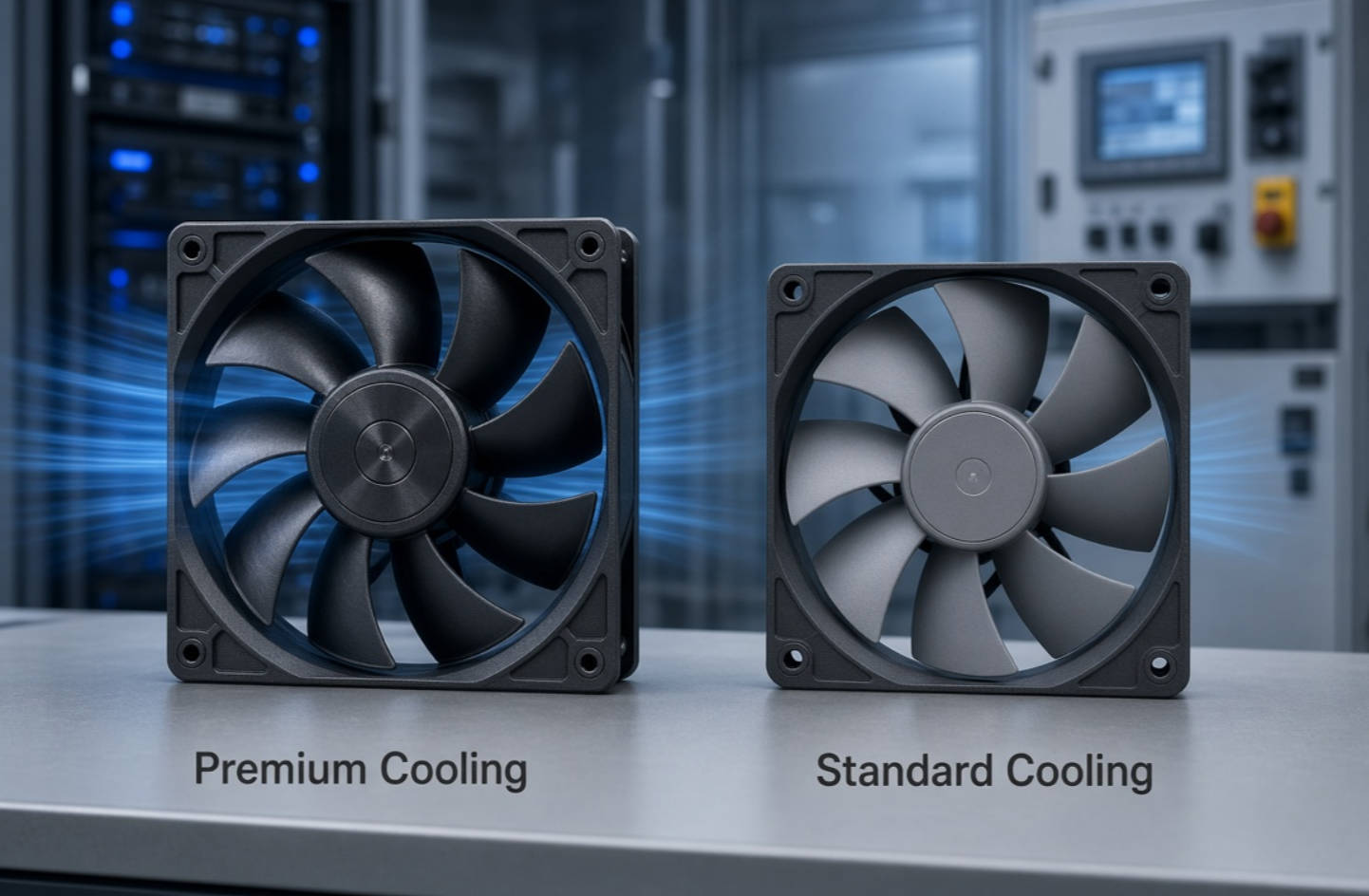
A standard cooling fan is usually designed for general-purpose airflow needs. It may be an AC axial fan, a brushless DC axial fan, a blower, or a compact fan installed in electronics, household devices, cabinets, power systems, or commercial equipment.
Standard fans are widely used because they are accessible, cost-effective, and available in many common sizes, such as 40 mm, 60 mm, 80 mm, 92 mm, 120 mm, and 172 mm. For equipment with moderate heat loads and open airflow paths, they can provide practical cooling at a lower initial purchasing cost.
However, "standard" does not mean that all fans have the same quality level. Fan performance depends on multiple engineering factors:
- Motor design
- Bearing system
- Impeller geometry
- Frame construction
- Speed-control capability
- Electronic protection functions
- Airflow and static-pressure curve
- Operating-temperature range
- Expected life under rated conditions
- Manufacturing consistency
A low-cost fan may look similar to a premium fan in size and rated voltage. But it may behave very differently once it is installed behind a filter, heat sink, narrow grille, cable bundle, dense PCB layout, or long duct path.
SANYO DENKI's San Ace product range is designed for applications where cooling performance and equipment uptime matter. The company's DC cooling fans are positioned around high airflow, high static pressure, low noise, low vibration, and reliability across a broad range of frame sizes and configurations.
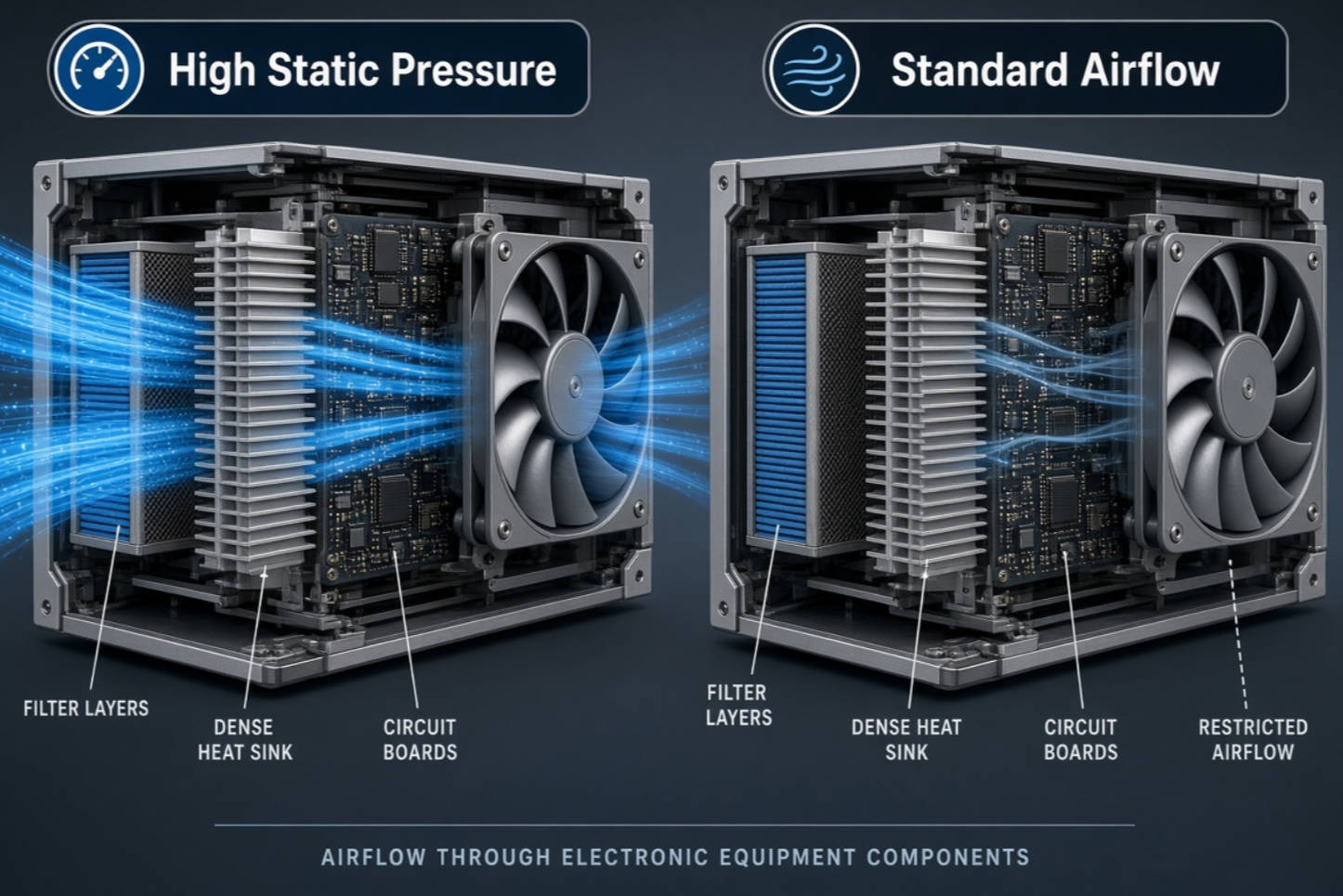
The difference is especially important in systems with high airflow resistance. In real equipment, a fan rarely operates in completely open air. It must push or pull air through components that restrict airflow.
These restrictions can include:
- Dense heat sinks
- Air filters
- Protective fan guards
- Telecom-rack doors
- Circuit boards
- Power modules
- Battery packs
- Narrow air channels
- Dust accumulation over time
In these situations, static pressure becomes just as important as free-air airflow.
A fan with a high CFM rating but weak static pressure may lose a large portion of its effective airflow after installation. By contrast, a high-static-pressure fan can better maintain airflow when resistance rises.
For example, SANYO DENKI's 92 × 92 × 25 mm San Ace 92AD ACDC fan provides up to 47.3 CFM of airflow and 0.305 inH₂O of maximum static pressure in a listed high-speed model. The product announcement states that this static pressure represents about a 55% increase over the company's earlier comparison model, while airflow increased by approximately 21%.
The table below summarizes the major differences buyers should evaluate when comparing Sanyo Denki fans with standard cooling fans.
| Comparison Factor | Sanyo Denki Fans | Standard Cooling Fans |
|---|---|---|
| Primary design focus | High-performance, high-reliability electronic and industrial cooling | General ventilation and cost-sensitive cooling applications |
| Airflow performance | Designed for strong airflow across multiple product families | Often adequate for open-air or low-resistance applications |
| Static pressure | Strong options for high-resistance airflow paths | May decline sharply when filters, grilles, or dense components increase resistance |
| Expected service life | Long-life product options can reach up to 180,000 hours under specified L10 conditions | Life ratings vary widely and may be limited for continuous-duty applications |
| Monitoring features | Available models may include pulse output, locked-rotor detection, PWM control, and sensor options | Features vary; entry-level models may offer little or no monitoring |
| Speed control | PWM-compatible models support speed adjustment based on thermal demand | Some DC fans support control, but implementation and available options vary |
| Noise optimization | More options to balance speed, noise, airflow, and power use | Lower initial noise may come at the expense of cooling reserve |
| Application suitability | Servers, telecom systems, industrial equipment, control cabinets, power electronics | Consumer electronics, simple enclosures, general ventilation, light-duty systems |
| Total cost of ownership | Higher initial cost but potentially lower downtime and replacement risk | Lower upfront cost but potentially higher lifecycle risk in demanding systems |
| Engineering support | Better suited to detailed thermal design and performance selection | Often selected by voltage, size, and price alone |
The correct conclusion is not that every application requires a premium Sanyo Denki fan. The correct conclusion is that the fan must be matched to the system's true thermal and reliability requirements.
Many purchasing decisions start with airflow, commonly measured in CFM or m³/min. This is understandable because airflow is easy to compare. However, free-air CFM is only one part of fan selection.
A cooling fan must operate at the intersection of the fan curve and the system resistance curve.
In simple terms:
- Free-air airflow shows how much air a fan can move with minimal resistance.
- Static pressure shows how effectively the fan can push air against resistance.
- Operating point shows the airflow the system will actually receive after installation.
A standard fan may perform well in a large, open enclosure. But a telecom cabinet or server enclosure can have high resistance caused by filters, cable routing, heat sinks, grilles, and closely spaced boards.
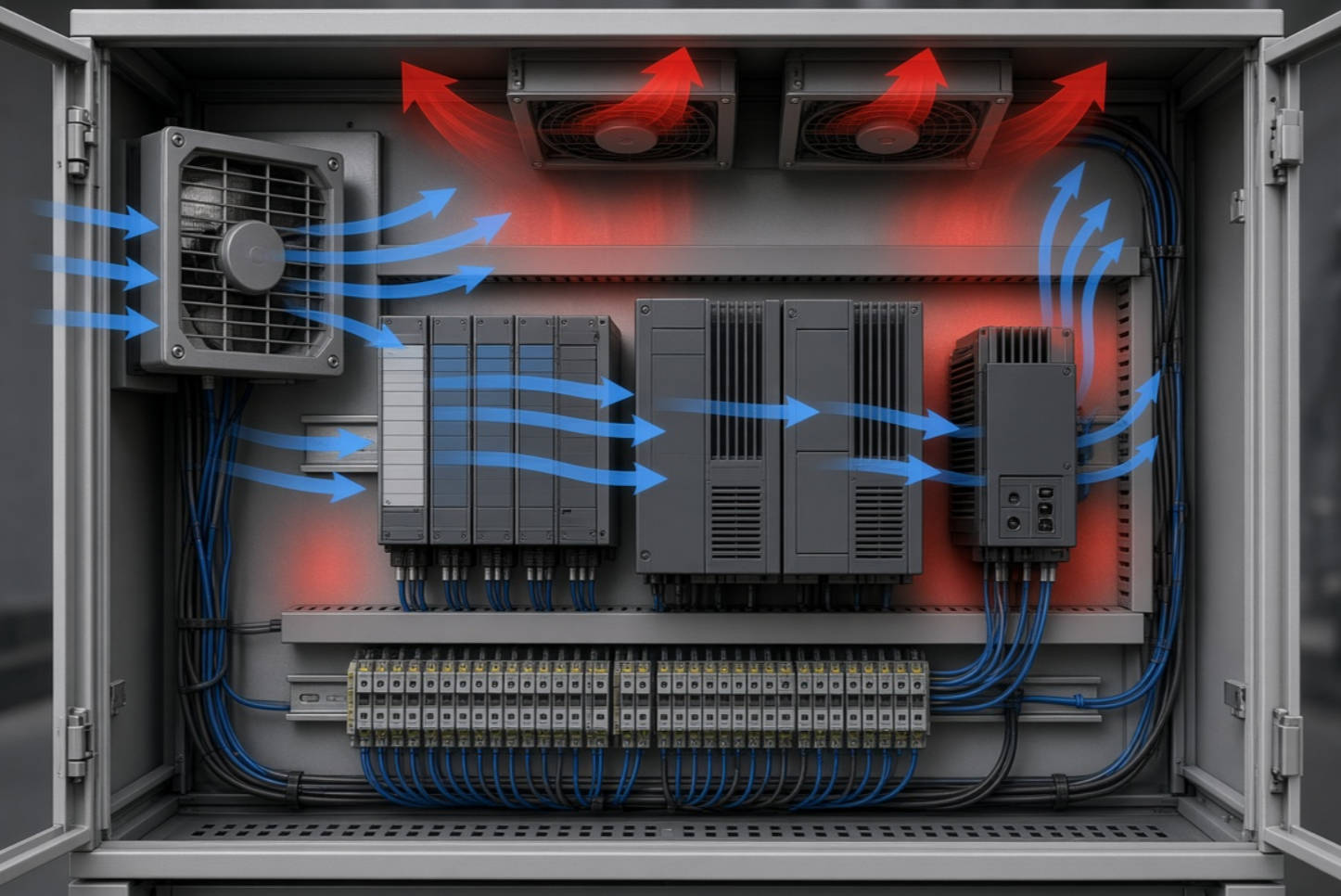
Imagine a control cabinet with a dust filter, an internal power supply, PLC modules, variable-frequency drives, terminal blocks, and limited exhaust space.
A lower-cost fan may provide acceptable free-air airflow on its datasheet. After installation, the filter and cabinet layout can reduce effective airflow. Internal temperatures rise. Components run hotter. Fan speed remains fixed. Dust continues to increase resistance over time.
A higher-static-pressure solution can maintain stronger airflow through the same restriction. If it also supports PWM control and speed feedback, the equipment can adjust fan operation based on actual temperature demand and detect abnormal fan conditions before thermal failure occurs.
This is why professional fan selection should focus on the P-Q curve, not only the maximum airflow number.
A cooling fan is a rotating electromechanical component. It experiences continuous stress from speed, bearing wear, dust, ambient temperature, voltage fluctuations, vibration, and operating hours.
For mission-critical equipment, fan failure is not a minor maintenance issue. It can lead to:
- Equipment overheating
- Reduced component lifetime
- Thermal shutdown
- Communication interruption
- Server performance throttling
- Unplanned field service
- Warranty claims
- Production downtime
SANYO DENKI offers long-life fan models with expected lives of up to 180,000 hours under stated L10 conditions: continuous operation in free air at 60°C and rated voltage, with a 90% survival rate.
It is important to interpret this correctly. An L10 life rating does not mean every fan will run exactly that number of hours. It means 90% of a defined sample population is expected to continue operating under the stated test conditions for that period.
Actual field life can be affected by:
- Ambient temperature
- Installation orientation
- Dust and contamination
- Voltage quality
- Load conditions
- Humidity
- Vibration
- Maintenance schedule
- Airflow blockage
- Start-stop frequency
For buyers, the lesson is clear: compare life ratings only when the test conditions are clearly stated. A generic statement such as "long life" is less useful than a specified L10 life at a stated temperature and voltage.
Cooling design is always a balancing exercise. Higher speed usually produces more airflow and static pressure, but it can also increase power use and acoustic noise.
The best solution is not necessarily a fan that runs at maximum speed all the time. It is often a fan system that delivers the right airflow at the right moment.
SANYO DENKI provides models with PWM speed-control capability. This can allow equipment to adjust fan speed in response to thermal conditions, helping reduce unnecessary energy consumption and noise during lighter loads. The company also offers sensor options, including pulse sensors for rotational-speed monitoring and locked-rotor detection on applicable models.
PWM-controlled fans can provide several practical benefits:
1. Lower noise during normal load
The fan can run at reduced speed when internal temperature is stable.
2. Higher cooling reserve during peak load
The control system can increase speed when power demand or ambient temperature rises.
3. Reduced energy consumption
The fan does not need to operate at full speed continuously.
4. Improved predictive maintenance
Speed feedback can help identify abnormal fan operation.
5. Better user experience
Lower acoustic noise is especially valuable in office equipment, telecom rooms, medical devices, and data environments.
A premium fan with speed control may therefore help engineers optimize the entire thermal system rather than simply adding more fans.
Standard cooling fans remain a sensible option in many applications. A higher-cost fan is not automatically necessary for every product.
A standard DC fan or AC fan may be suitable when:
- The heat load is low or moderate.
- The enclosure has a low-resistance airflow path.
- The equipment is not operated continuously.
- Fan replacement is simple and inexpensive.
- Downtime has limited operational impact.
- There is no need for speed monitoring or PWM control.
- The product is highly cost-sensitive.
- The operating environment is clean and temperature-controlled.
For example, a basic office device, display enclosure, small commercial cabinet, or low-power consumer device may not need a premium high-static-pressure cooling fan.
The key is to avoid using a standard fan in a high-risk application only because its initial price is lower.
As a cooling-fan supplier, we often see that fan selection is made too late in the equipment-design process. Engineers may first design the enclosure, PCB layout, airflow path, and heat sink. Then they select a fan based only on available mounting space.
This approach creates unnecessary compromise.
A better approach is to make fan selection part of the thermal design process from the beginning.
Before selecting a Sanyo Denki fan, CAPITAL DC fan, AC fan, or other cooling solution, confirm the following requirements:
1. Calculate the heat load
Identify the heat generated by processors, power modules, batteries, drives, LEDs, communication equipment, and other heat-producing components.
2. Define the allowable temperature rise
Determine the maximum internal temperature and the temperature limits of critical components.
3. Assess airflow resistance
Include filters, grilles, heat sinks, ducts, PCB density, cable bundles, and likely dust accumulation.
4. Review the required airflow and static pressure
Select from the complete fan performance curve rather than using free-air CFM alone.
5. Choose the correct power type
Consider 5V, 12V, 24V, 48V DC fans or AC fan voltage options based on system design.
6. Confirm the duty cycle
Continuous 24/7 equipment needs a different reliability target than intermittent-use equipment.
7. Consider monitoring needs
Select PWM, tachometer, alarm, or locked-rotor features when uptime is critical.
8. Evaluate acoustic requirements
Check sound pressure level under representative operating conditions.
9. Plan for the environment
Consider ambient temperature, dust, humidity, vibration, altitude, and corrosive exposure.
10. Compare lifecycle cost
Include downtime risk, field replacement labor, warranty exposure, and energy use—not only unit price.
In industrial and telecom applications, the fan is usually a small portion of the total equipment cost. Yet it can influence the reliability of far more expensive components.
A less-expensive fan can become costly when it causes:
- Repeat maintenance visits
- Emergency replacement stock
- Customer complaints
- Premature capacitor or semiconductor aging
- Temperature-related communication faults
- Reduced product reputation
- Service-level agreement penalties
This is why experienced OEMs and system integrators often use a tiered cooling strategy:
- Use standard fans for low-risk and cost-sensitive equipment.
- Use higher-performance DC fans for compact electronics.
- Use high-static-pressure fans for restricted airflow paths.
- Use long-life and monitored fans for remote, critical, or continuous-duty installations.
For products installed in difficult-to-service environments, the purchase decision should prioritize predictable performance over minimum initial price.
Capital Technology Co., Limited supports customers that need dependable cooling products for electronics, telecom, industrial automation, power systems, and OEM equipment manufacturing.
Our product capabilities include:
- CAPITAL-brand DC fans
- CAPITAL-brand AC fans
- Blowers and cooling accessories
- SANYO DENKI San Ace fan solutions
- Fan selection based on airflow and static pressure
- OEM and ODM cooling support
- Application-oriented product recommendations
- Solutions for high-density and high-reliability equipment
As a SANYO DENKI distributor, we can help customers compare premium San Ace cooling fan options with standard cooling fans based on actual operating requirements. This helps buyers avoid both under-specification and unnecessary over-specification.
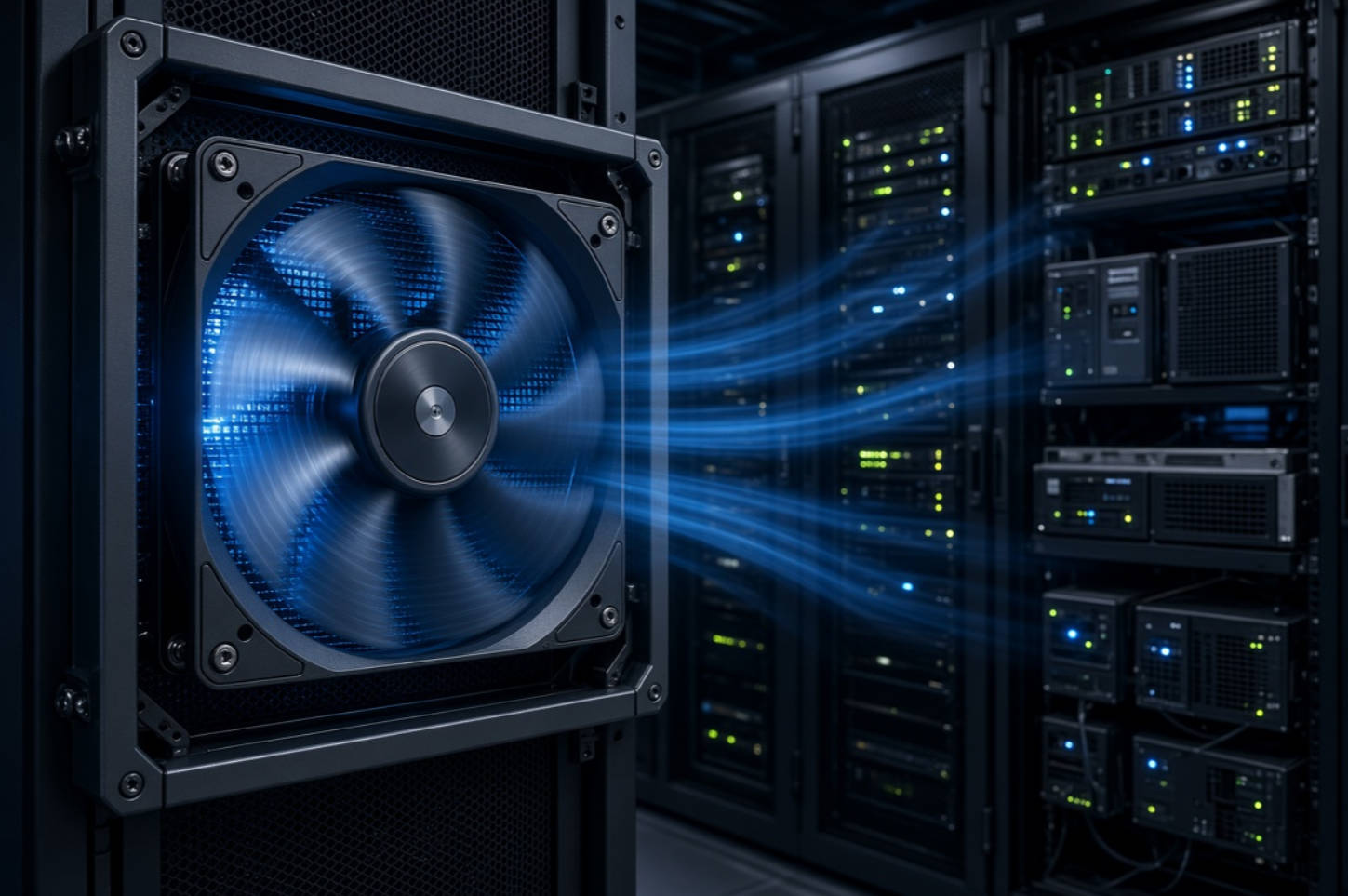
The difference between Sanyo Denki fans and standard cooling fans is not limited to brand positioning. It is mainly about engineering performance, reliability expectations, airflow resistance handling, monitoring capability, and total lifecycle value.
Choose a standard cooling fan when your system has modest thermal demand, low airflow resistance, accessible maintenance, and strict unit-cost targets.
Choose a Sanyo Denki fan when your application requires high static pressure, strong airflow in restricted spaces, longer expected life, sensor feedback, PWM control, stable continuous operation, or reduced risk of overheating-related downtime.
For high-value equipment, cooling should be treated as a reliability strategy—not just a component purchase.
Need help selecting the right DC fan, AC fan, or SANYO DENKI San Ace model for your equipment? Contact Capital Technology with your fan size, voltage, airflow target, static-pressure requirement, operating temperature, and application details. Our team can help you identify a cooling solution that balances performance, reliability, noise, and cost.
Sanyo Denki fans are not automatically necessary for every application, but they are generally more suitable for demanding cooling requirements. They are especially valuable where high static pressure, long service life, stable airflow, fan monitoring, PWM control, and continuous operation are important.
The biggest difference is often performance under resistance. A standard fan may provide acceptable free-air airflow, while a high-static-pressure Sanyo Denki fan can better maintain airflow through filters, heat sinks, narrow channels, and dense equipment layouts.
Use a high-static-pressure fan when air must move through restrictive components, such as heat sinks, filters, telecom racks, server chassis, power modules, dense circuit boards, or narrow ventilation channels.
L10 life refers to the time during which 90% of a tested group of fans is expected to continue operating under specified conditions. Always check the stated temperature, voltage, installation conditions, and test method when comparing expected fan life.
Yes. PWM control allows the system to adjust fan speed according to thermal demand. At lower temperatures, the fan can operate at a reduced speed, which can lower noise and power consumption. At higher temperatures, it can increase speed to provide additional cooling.
Not always. Even if two fans share the same dimensions and rated voltage, they may have very different airflow curves, static-pressure capability, current draw, speed, noise level, expected life, connector type, and monitoring features. Compare full specifications before making a replacement decision.
DC fans are commonly selected when variable speed control, lower voltage operation, monitoring, compact electronics integration, or intelligent thermal control is required. AC fans are often used for simple, fixed-speed ventilation in industrial cabinets and equipment powered directly from AC mains.
1. SANYO DENKI. "Cooling Fan Systems By SANYO DENKI AMERICA." Available at: [SANYO DENKI San Ace Cooling Fan Systems]
2. SANYO DENKI. "DC Cooling Fan | San Ace." Available at: [SANYO DENKI DC Fan Product Information]
3. SANYO DENKI. "Long Life Fan | San Ace." Available at: [SANYO DENKI Long Life Fan Information]
4. SANYO DENKI. "SANYO DENKI Develops 92 × 92 × 25 mm ACDC Fan with the Highest Static Pressure in the Industry." June 10, 2025. Available at: [San Ace 92AD ACDC Fan Product News]
5. SANYO DENKI. "Fan Lifespan | Basic Knowledge of Fans." Available at: [SANYO DENKI Fan Lifespan and L10 Explanation]
6. SANYO DENKI. "San Ace Cooling Systems Catalogs." Available at: [SANYO DENKI Cooling Fan Catalogs]
7. Greenheck. "Understanding Bearings for the Fan Industry." Available at: [Fan Bearing Life and L10 Reliability Guide]
8. Rotron. "Operational Life and Reliability." Available at: [Cooling Fan Operational Life Information]


