From idea to market-ready product, our NPI solutions make every stage easier, faster. Discover How We Help
Help Center

Views: 0 Author: Site Editor Publish Time: 2026-03-04 Origin: Site
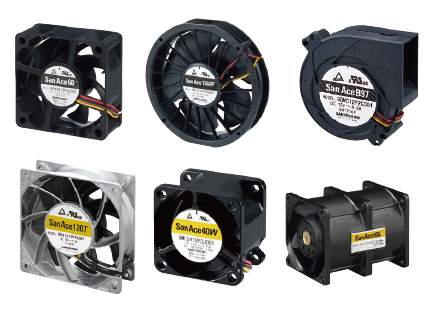
Choosing the right industrial cooling fan for electronic devices goes far beyond simply picking the one with the highest airflow. It is a systematic engineering process that requires a comprehensive evaluation of heat dissipation requirements, installation environments, reliability, and noise levels. Following the steps below will help you make a precise selection.
Step 1: Quantify Cooling Requirements and Constraints
This is the foundation of the selection process, aiming to clarify "how much heat needs to be removed" and "how much space is available for installation."
1.Calculate Required Airflow
Airflow (typically expressed in CFM or m³/min) determines how much heat can be removed per unit of time. A simplified estimation method is based on the device's heat output and the allowable temperature rise. When selecting a fan, it is advisable to add a 30% margin to this calculated value to account for environmental changes and efficiency degradation over long-term operation.
2.Define Installation Dimensions
Measure the space available for fan installation inside the device or on the cabinet (Length × Width × Height, in mm). Common sizes include 80mm, 120mm, and 140mm. Dimensions not only determine installation compatibility but also directly limit the fan's potential maximum airflow and static pressure.
Step 2: Match Fan Type and Core Parameters
After clarifying the basic requirements, you need to select the appropriate fan type and core performance parameters based on the specific internal structure of the device.
Choose the Right Fan Type
Different fan types have different characteristics regarding airflow and static pressure:
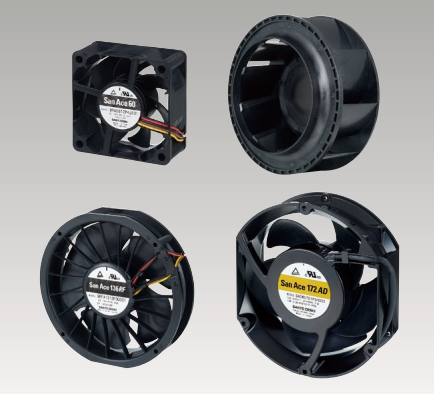
▶ Axial Fan: The airflow direction is parallel to the fan shaft. The characteristic is high airflow and low static pressure. It is suitable for open spaces and scenarios with low duct resistance, such as general cabinet ventilation and internal air circulation within equipment.
▶ Centrifugal Fan (Blower): Air is drawn in radially and discharged axially. The characteristic is high static pressure and relatively low airflow. It is suitable for scenarios with complex ducts, high resistance, or where airflow needs to be directed to a specific location, such as passing through dense heat sinks or long ducts.
Understand and Balance Core Parameters
| Parameter | Unit | Function | Selection Points |
| Air Flow | CFM / m³/min | Determines air movement speed and directly affects cooling efficiency | Large space, low resistance → Prioritize airflow |
| Static Pressure | Pa / mmH2O | Determines the fan's ability to overcome resistance (e.g., filters, heat sinks) | High resistance, complex ducts → Prioritize static pressure |
| Noise | dBA | Affects the comfort of the working environment | Office, medical → Choose low noise; Industrial site → Can be more lenient |
Core Principle: Airflow and static pressure need to be considered together. Focusing only on airflow may result in the airflow being unable to penetrate in a resistive environment; focusing only on static pressure may cause unnecessary energy consumption and noise in an open space.
Step 3: Evaluate Environmental Adaptability and Reliability
Industrial environments are complex and variable. The environmental adaptability and reliability of the fan directly determine the stable operating time of the equipment.
1.Temperature Resistance
Ensure the fan's operating temperature range fully covers the actual operating environment of the device, especially considering extreme temperatures.
✔Conventional Scenarios: -20℃ ~ 70℃
✔Medium/High-Temperature Scenarios: For applications like kilns or welding equipment, select fans with a temperature resistance of -10℃ ~ 120℃. These fans have motors and lubricating greases designed for high temperatures.
✔Low-Temperature Scenarios: For applications like cold chain equipment, select fans with a temperature resistance of -40℃ ~ 60℃ to prevent grease solidification and startup failure.
2.Protection Rating (IP Rating)
Choose based on the amount of dust and moisture in the environment.
✔Dusty Environments: At least IP65 to prevent dust from entering the bearings and causing wear.
✔Outdoor or High-Humidity Environments: It is recommended to choose IP67 or higher to ensure protection against water and moisture.
3.Reliability
Industrial equipment typically requires 7×24 hours of continuous operation. Choose products with a high MTBF (Mean Time Between Failures), for example, ≥30,000 hours (industrial grade) or ≥70,000 hours (data center grade). Bearing type is a key factor affecting lifespan. Double ball bearings are more durable than sleeve bearings and are suitable for long-term operation.
Step 4: Consider Additional Features and Installation Layout
1.Intelligent Control and Noise Reduction
Choose fans with PWM (Pulse Width Modulation) speed control to automatically adjust the speed based on temperature. This ensures cooling performance while effectively reducing noise and energy consumption at low loads.
2.Optimize Installation Layout
Follow the principle of "air intake at the bottom/front, exhaust at the top/rear" to layout the intake and exhaust ports. Utilize the principle of hot air rising naturally to form an efficient directional airflow, avoiding short-circuiting or dead zones in heat dissipation.
Selection Pitfalls to Avoid
① Misconception: Focusing only on parameters, ignoring the actual operating point
A fan's rated airflow is measured in a no-resistance environment. In actual installations, effective airflow will drop significantly due to duct resistance. You should confirm the actual operating point by combining the fan's P-Q curve (airflow-static pressure curve) with the equipment's airflow resistance characteristics.
② Misconception: Focusing only on airflow, ignoring static pressure
This is the most common mistake. If there are dense heat sinks or filters inside the device, you must select a high-static-pressure fan. Otherwise, even if the airflow parameter is very high, the airflow will not be able to penetrate the resistance effectively, and the cooling effect will be greatly reduced.
③ Misconception: Blindly pursuing high speed
The higher the speed, the higher the airflow, noise, and bearing wear. Under the premise of meeting cooling requirements, choose a fan with a moderate speed to balance cooling, noise, and lifespan.
Summary
Selecting an industrial cooling fan is all about achieving a balance between performance, environment, and reliability.
① Calculate Requirements: Quantify airflow and spatial dimensions.
② Select Type: Choose between axial and centrifugal fans based on duct resistance, and balance airflow, static pressure, and noise.
③ Select Type: Choose between axial and centrifugal fans based on duct resistance, and balance airflow, static pressure, and noise.
④ Focus on Reliability: Choose industrial-grade products with high MTBF and high-quality bearings.
Through the systematic steps above, you can effectively avoid selection pitfalls and find the most suitable industrial cooling fan for your electronic device.
Need Help Choosing the Best Cooling Fan?
Still unsure which cooling fan is right for your needs?
Drop a comment by the way,and we’ll help you find the ideal product while offering you superior service.