From idea to market-ready product, our NPI solutions make every stage easier, faster. Discover How We Help
Help Center

Views: 222 Author: Capital Technology Publish Time: 2026-06-20 Origin: Site
Content Menu
● Why Enhanced Industrial Fans Matter Today
● Understanding Industrial Cooling Fans and Systems
● Core Product Categories: DC Fans, AC Fans, Radiators, Filters
>> DC Fans (Direct Current Fans)
>> AC Fans (Alternating Current Fans)
>> Radiators (Heat Dissipation Assemblies)
>> Filters and EMC/Power Quality Components
● Key Features of Enhanced Industrial Fans
>> 2. Reliability and Long Service Life
>> 3. Enhanced Safety and Air Quality
● Typical Industrial and Commercial Applications
>> Material Handling and Bulk Processing
>> Cooling, Drying, and Comfort Ventilation
● Market Trends in Industrial Cooling and Fan Technology
● CAPITAL Technology: From Component Supplier to Cooling Solution Partner
● Why Leading Telecom and Electronics Companies Trust CAPITAL
● How to Select the Right DC/AC Fan and Cooling Solution
● Balancing Efficiency, Reliability, and Total Cost of Ownership
● Sample Specification Focus Table for DC/AC Fans
● Call to Action: Partner with CAPITAL for Your Next Cooling Project
>> 1. How do I choose between a DC fan and an AC fan for my project?
>> 2. What are the main benefits of using enhanced industrial fans instead of basic models?
>> 3. How do industrial fans improve worker safety and productivity?
>> 4. Why do major telecom companies choose CAPITAL as a cooling supplier?
>> 5. How is the industrial cooling market expected to evolve in the next few years?
Modern manufacturing, telecom, and electronics operations depend on reliable industrial fans and cooling systems to keep equipment running safely, efficiently, and sustainably. Drawing on my experience supporting B2B engineering teams and CAPITAL's role as both a cooling-fan manufacturer and chief agent of SANYO DENKI, this article explores how enhanced AC/DC fans, radiators, and filters create real-world value for industrial users. [pelonistechnologies]
Industrial facilities face rising energy costs, stricter environmental regulations, and growing demands for equipment reliability. At the same time, higher-power electronics, AI servers, and dense telecom gear generate more heat than traditional systems, making thermal management a strategic priority rather than a simple maintenance task. [straitsresearch]
In this context, advanced DC fans, AC fans, radiators, and filtration systems have evolved from basic airflow devices to engineered thermal solutions that combine efficiency, reliability, and data-driven performance monitoring. [accio]
Industrial fans are designed to move large volumes of air for cooling, ventilation, and process control in commercial and industrial environments. They are available in configurations such as axial fans, centrifugal blowers, and inline duct models, each optimized for specific pressure and airflow requirements. [superdutyfans]
Complementary components—including radiators (heat exchangers), filters, and reactors—form complete cooling systems that manage both heat and airborne contaminants around sensitive electronic or mechanical equipment.
DC fans use direct current power and are widely used in electronics, telecommunications, servers, and precision equipment. [pelonistechnologies]
Key characteristics of DC fans include:
- Precise speed control via PWM or voltage regulation for optimized airflow and noise
- High efficiency, especially with brushless DC (BLDC) designs that can cut power consumption significantly compared with older motors [accio]
- Long service life due to reduced mechanical wear and robust bearing systems
These capabilities make DC fans ideal for applications in base stations, routers, baseband units, power supplies, and embedded systems where fine control and energy savings matter.
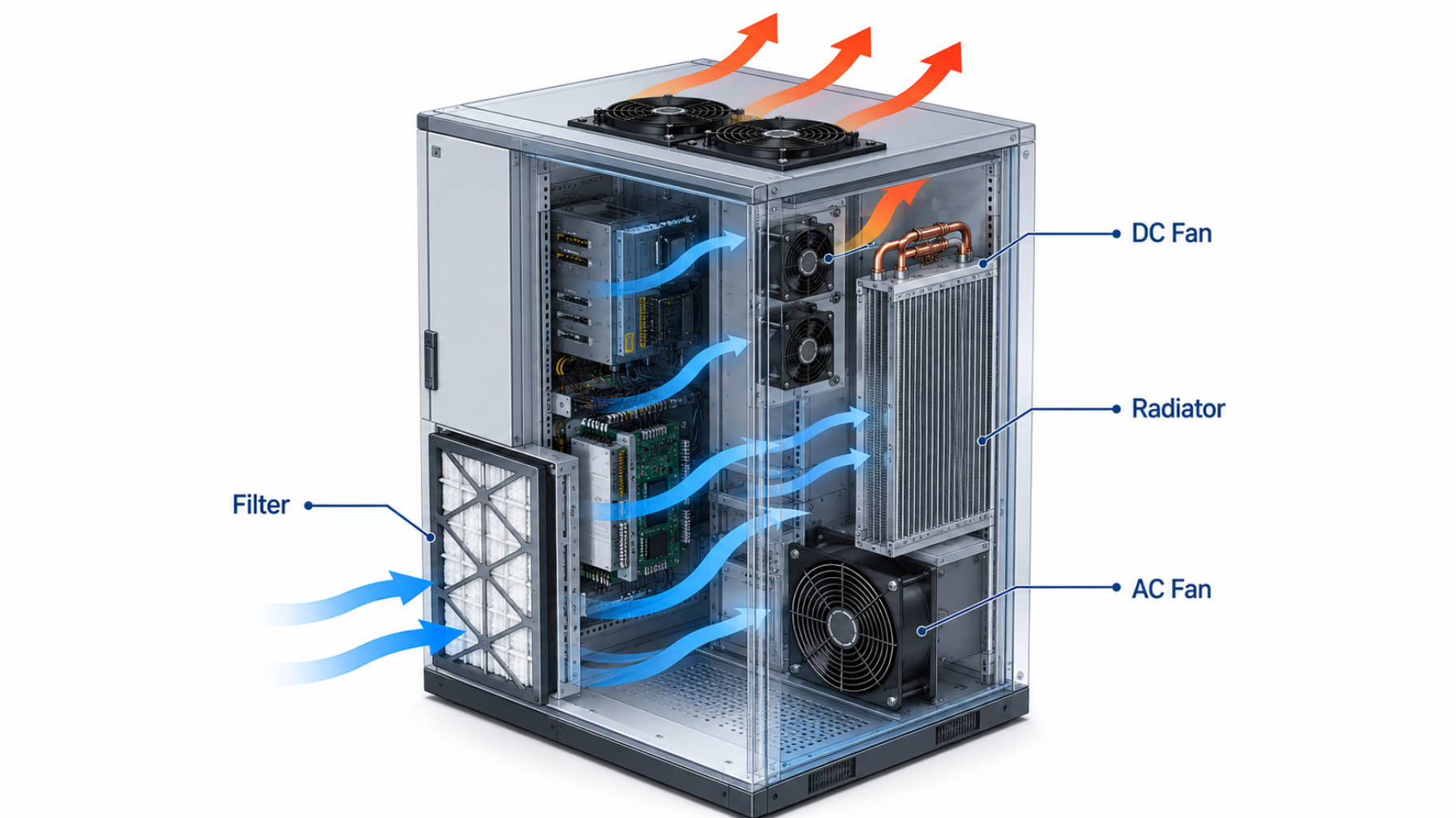
AC fans are commonly used in industrial cabinets, power equipment, and infrastructure systems where AC mains power is standard. They provide:
- Robust, continuous-duty performance in harsh industrial environments
- Simpler power integration for many legacy systems
- High airflow at stable speed, suitable for enclosures and control panels
For many customers upgrading from basic AC fans, enhanced models with improved blades, bearings, and insulation deliver better efficiency and reliability without changing the power architecture. [pelonistechnologies]
Radiators and heat exchangers play a crucial role in transferring heat away from power modules, converters, inverters, and high-density electronics. When integrated with the right fans, they: [straitsresearch]
- Increase effective heat transfer surface area
- Enable forced-air cooling by channeling airflow across fins
- Help maintain safe operating temperatures for critical components
In data centers and advanced industrial cooling systems, radiators are increasingly paired with fans to complement or replace traditional chiller-based systems, improving overall efficiency. [polarismarketresearch]
Filters and reactors help manage both air quality and electrical performance around cooling systems.
- Air filters prevent dust and particulates from entering enclosures, extending fan and equipment life
- Electrical filters and reactors improve power quality and reduce noise, supporting stable fan and system operation
Combined with DC and AC fans, these components form complete thermal and protection solutions for industrial and telecom clients.
Modern industrial fans use optimized airfoil blades and motor technologies to maximize airflow while minimizing energy consumption. Features include: [accio]
- Long, aerodynamically refined blades for thermal destratification, equalizing temperature layers and reducing hot spots [pelonistechnologies]
- BLDC motors and high-efficiency AC motors that can reduce power usage by up to 30% compared to traditional designs [accio]
- Integration with smart control systems to adjust speed based on load and temperature [accio]
These improvements help companies cut operating costs and align with sustainability goals.
Industrial fans often run 24/7 in harsh environments, so reliability is critical. Enhanced fan systems offer: [boccolorado]
- Rugged housings and coatings that resist corrosion, moisture, and contaminants
- Advanced bearing systems designed for long service intervals
- Components that are easier to replace and source than legacy parts, reducing downtime and maintenance time [boccolorado]
For OEMs and integrators, this translates into fewer service calls and lower total cost of ownership.

In many industries, fans serve as first-line safety devices by removing harmful fumes, dust, and excess heat. Enhanced systems contribute by: [superdutyfans]
- Maintaining proper ventilation in chemical processing, material handling, and manufacturing environments [pelonistechnologies]
- Reducing risk of heat-related illness and improving worker comfort, which can boost productivity by up to 10% in hot environments [superdutyfans]
- Controlling humidity and preventing mold, corrosion, and product degradation in storage or production areas [superdutyfans]
These benefits have a direct impact on worker health, product quality, and compliance with safety regulations.
In chemical plants, industrial fans circulate air to dilute or extract hazardous vapors, keep temperatures stable, and support coating or drying processes. Fans must withstand abrasive, corrosive, and sometimes flammable atmospheres while operating continuously. [pelonistechnologies]
Fans and blowers are used to transport sawdust, pellets, grains, and powders, and to clear debris from production lines. Properly selected fans handle abrasive and moist materials and help keep conveyors, silos, and process equipment clean and safe. [pelonistechnologies]
Industrial fans maintain comfortable and safe environments in:
- Gymnasiums, spas, greenhouses, restaurants, and construction sites [pelonistechnologies]
- Large manufacturing halls and logistics centers, where airflow mitigates heat build-up
- High-heat spots near ovens, kilns, or furnaces, where localized cooling is necessary [superdutyfans]
By equalizing temperature and reducing humidity, fans can reduce perceived temperature by up to 8 degrees Fahrenheit and significantly cut air-conditioning load. [superdutyfans]
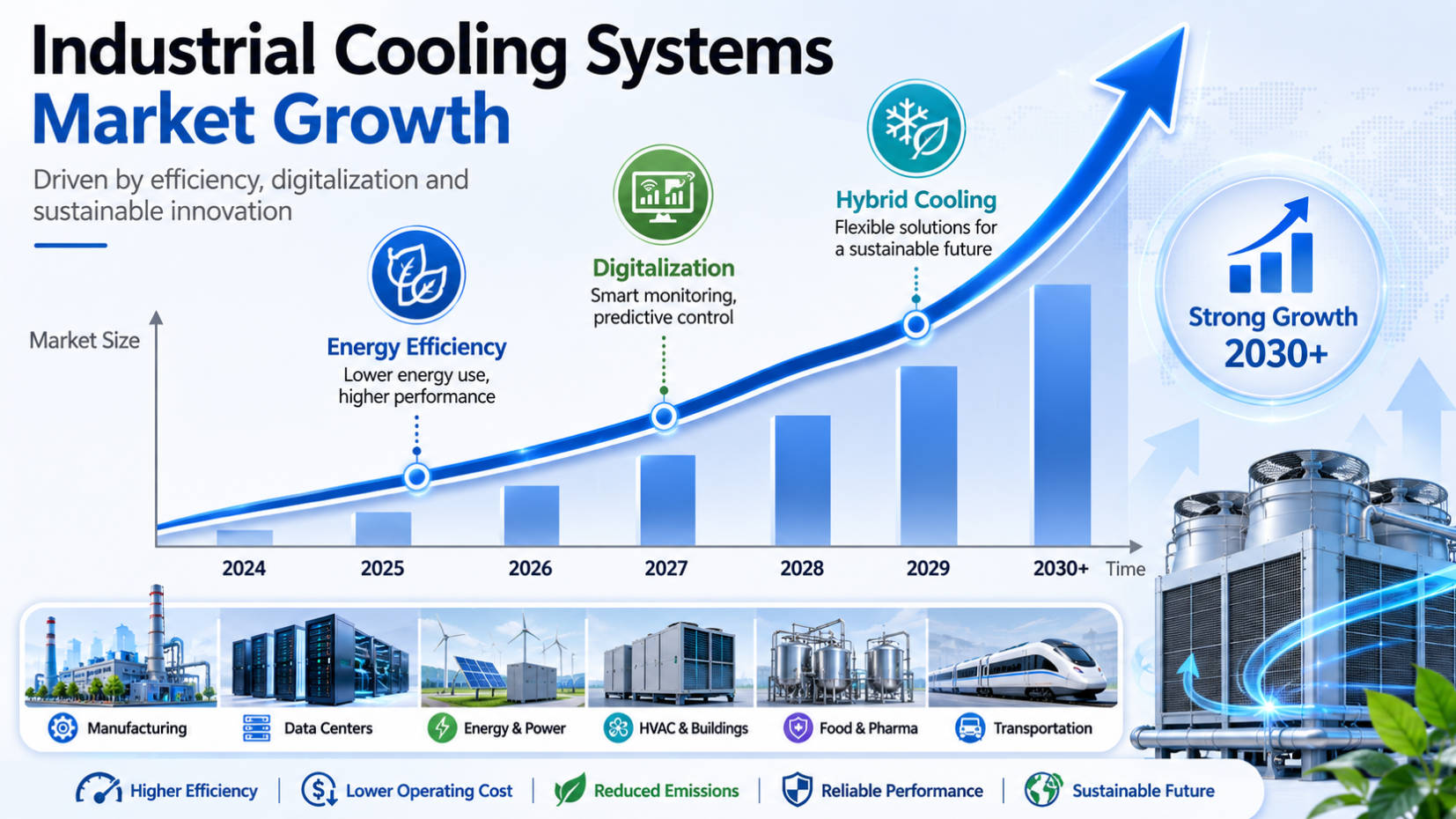
Industry data shows that the global industrial cooling system market is projected to grow strongly, driven by demand for efficient and environmentally friendly heat dissipation solutions. Key trends include: [polarismarketresearch]
- Shift toward energy-efficient systems that reduce power consumption and carbon emissions [straitsresearch]
- Increasing adoption of digital controls, IoT integration, and remote monitoring for cooling systems [polarismarketresearch]
- Growth of liquid and hybrid cooling architectures in high-density computing and AI data centers, often complemented by advanced fans and radiators [straitsresearch]
In this context, enhanced industrial fans are not just stand-alone devices—they are integral components of holistic thermal management strategies across sectors.
According to its company profile, Capital Technology Co., Limited is both a cooling fan manufacturer and the chief agent of SANYO DENKI, a leading enterprise in the cooling fan industry. CAPITAL offers an independent CAPITAL-branded product line covering cooling fans, DC/AC fans, radiators, filters, reactors, and related components. [szcpt]
With more than a decade of specialized experience, CAPITAL combines engineering expertise, manufacturing capability, and open technical support to provide tailored cooling solutions for customers. The company has become a supplier to well-known enterprises such as ZTE, HUAWEI, HYTERA, and GOLD POWER, receiving recognition and best-supplier awards for quality and service.
From a B2B buyer's perspective, large telecom and electronics firms select cooling partners based on performance, reliability, and lifecycle support rather than price alone. CAPITAL's positioning offers several advantages:
- Close alignment with SANYO DENKI's century-long brand heritage, ensuring access to advanced cooling technologies and rigorous quality standards [mouser]
- A broad product portfolio under the CAPITAL brand, allowing integration of fans, radiators, filters, and reactors into complete system-level solutions [szcpt]
- An experienced engineering team that designs application-specific cooling solutions for telecom cabinets, power systems, and industrial equipment
This combination allows CAPITAL to act as a long-term thermal management partner for OEMs and system integrators rather than just a component vendor.
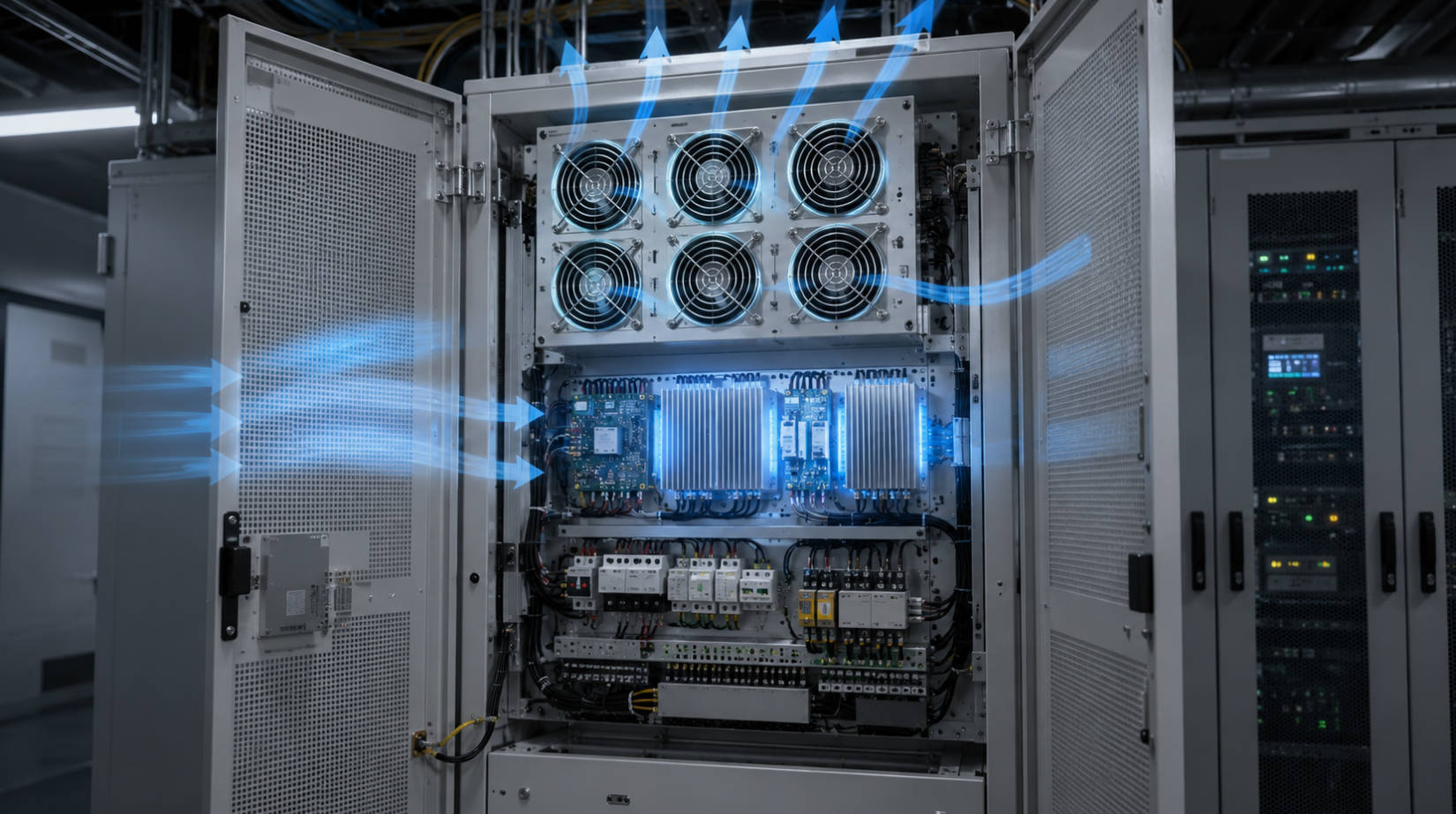
From an industry practitioner's viewpoint, choosing the right fan and cooling system can be distilled into a structured process:
1. Define thermal requirements
- Maximum allowable temperature for key components
- Expected ambient conditions (altitude, humidity, contaminants)
2. Calculate airflow and pressure needs
- Use system-level simulations or manufacturer tools to determine required CFM and static pressure
- Consider pressure drops across filters, grills, and radiators
3. Choose fan type and configuration
- DC fans for precise speed control, lower power consumption, and integration with digital control systems
- AC fans for robust, straightforward deployment in AC-powered enclosures
- Axial vs. centrifugal fans depending on ducting and pressure requirements
4. Integrate supporting components
- Radiators and heatsinks sized to match heat load and airflow
- Filters to maintain air quality and protect internal components
- Reactors and power filters where power quality or EMC is a concern
5. Plan for reliability and maintenance
- Evaluate MTBF, bearing type, and environmental ratings
- Ensure easy access for cleaning filters and replacing fans without disrupting operations
Working with a supplier like CAPITAL that offers both components and engineering support helps ensure that each step is aligned with real-world deployment needs.
From my perspective working with industrial and telecom clients, successful cooling strategies consistently balance three priorities:
- Energy efficiency: Using high-efficiency DC/AC fans and optimized airflow designs reduces energy consumption and contributes to ESG targets. [straitsresearch]
- System reliability: Well-designed cooling keeps critical components within safe temperature ranges, extending their lifespan and minimizing unplanned downtime. [boccolorado]
- Total cost of ownership (TCO): Investing in higher-quality fans and integrated solutions often pays off by reducing maintenance, energy, and replacement costs over the product lifecycle. [boccolorado]
By integrating SANYO DENKI technology with its own CAPITAL-branded products and application expertise, CAPITAL is positioned to help customers optimize all three dimensions across diverse industrial and telecom environments. [mouser]
| Fan Type | Typical Application | Key Benefits |
|---|---|---|
| DC axial fan | Telecom base stations, servers | Precise speed control, high efficiency, low noise pelonistechnologies |
| AC axial fan | Control cabinets, power units | Simple integration, robust continuous operation |
| DC blower | Enclosed modules, hot spots | Higher pressure for ducted or constrained spaces pelonistechnologies |
| AC blower | Industrial ventilation | Strong airflow for larger volumes and ducts pelonistechnologies |
Each row highlights how matching fan type to application enhances performance and reliability for industrial users.
If you're designing or upgrading a telecom system, industrial control panel, power supply, or high-density electronics platform, the right cooling strategy can be the difference between stable performance and chronic downtime. CAPITAL combines SANYO DENKI technology, in-house manufacturing, and experienced application engineering to deliver tailored DC/AC fan, radiator, filter, and reactor solutions. [mouser]
To discuss your specific thermal requirements or request a consultation, contact Capital Technology Co., Limited through the details on their official website and explore how a customized cooling solution can support your next-generation products. [szcpt]
DC fans are ideal when you need precise speed control, integration with digital systems, and lower power consumption, making them well suited for telecom and electronics applications. AC fans are better for environments where AC mains power is standard and where robust, continuous-duty operation is the priority, such as industrial cabinets and infrastructure systems. [accio]
Enhanced industrial fans use optimized blades, high-efficiency motors, and robust materials to provide better airflow, lower energy consumption, and longer service life than basic models. They also contribute to safer, more comfortable environments by improving ventilation, humidity control, and temperature stability in industrial and commercial facilities. [boccolorado]
Industrial fans help remove pollutants, smoke, and odors and control humidity levels, reducing risks of heat stress and poor air quality. Studies show that effective industrial ventilation can lower perceived temperature by several degrees and improve productivity by up to 10% in hot environments. [superdutyfans]
Major telecom companies such as ZTE, HUAWEI, and HYTERA work with CAPITAL because of its combination of SANYO DENKI representation, independent CAPITAL-branded products, and strong engineering support. CAPITAL's focus on quality and customized thermal solutions has earned it best-supplier recognition and long-term relationships with these clients. [mouser]
The industrial cooling market is expected to grow steadily, driven by energy-efficiency regulations, digital infrastructure expansion, and environmental targets. Future systems will combine high-efficiency fans, advanced radiators, digital controls, and in some cases liquid or hybrid cooling, creating integrated thermal management platforms for industrial and data center environments. [polarismarketresearch]
1. Pelonis Technologies. "Enhanced Industrial Fan Features & Benefits for Your Facility."
<https://www.pelonistechnologies.com/blog/enhanced-industrial-fans-features-benefits-market> [pelonistechnologies]
2. Capital Technology Co., Limited – Company Profile.
<https://www.en.szcpt.com/intro/1.html>
3. Shenzhen Xin Kaibite Technology Co., Ltd. (CAPITAL brand overview and products).
<https://www.szcpt.com> [szcpt]
4. Accio. "Industrial Air Cooler Trends 2025: Smart & Energy-Efficient."
<https://www.accio.com/business/industrial-air-cooler-trends> [accio]
5. Straits Research. "Industrial Cooling Systems Market Trends, Size, Growth."
<https://straitsresearch.com/report/industrial-cooling-system-market> [straitsresearch]
6. Super Duty Fans. "How Effective Are Industrial Fans? A Comprehensive Guide."
<https://superdutyfans.com/2024/06/28/how-effective-are-industrial-fans-a-comprehensive-guide/> [superdutyfans]
7. Polaris Market Research. "U.S. Industrial Cooling Systems Market Trend 2025."
<https://www.polarismarketresearch.com/industry-analysis/us-industrial-cooling-systems-market> [polarismarketresearch]
8. BetterBricks / BOC Colorado. "Efficient Fans: The Four 'F's of Commercial and Industrial Fans."
<http://www.boccolorado.org/new-blog/2025/8/13/efficient-fans-the-four-fs-of-commercial-and-industrial-fans> [boccolorado]
9. Mouser Electronics. "SANYO DENKI Distributor Overview."
<https://www.mouser.com/manufacturer/sanyo-denki/> [mouser


