From idea to market-ready product, our NPI solutions make every stage easier, faster. Discover How We Help
Help Center

Views: 219 Author: CAPITAL Fans Publish Time: 2026-06-25 Origin: Site
As electric vehicle (EV) adoption accelerates globally, the reliability of EV charging stations has become mission-critical. One often overlooked yet essential component is the cooling system—specifically, the IP68 cooling fan that ensures stable operation in extreme outdoor environments.
From my experience working with telecom and industrial clients such as Huawei and ZTE, I've seen firsthand how environmental exposure can quickly degrade standard cooling components. In this case, we partnered with a leading EV infrastructure provider facing severe reliability challenges in their outdoor charging systems and factory automation (FA) robots.
This article breaks down how a high-performance IP68-rated DC blower fan solved their problem and delivered measurable improvements in durability, maintenance, and total cost of ownership.
EV fast-charging stations are increasingly deployed in:
- Coastal regions with high salt exposure
- Desert areas with airborne dust and sand
- High-humidity zones with frequent rainfall
- Industrial zones with chemical and particulate contamination
Unlike indoor systems, these installations demand continuous 24/7 operation under fluctuating environmental conditions.
Similarly, factory automation robots used in smart manufacturing environments generate significant heat while operating in:
- High-temperature workshops
- Dust-heavy production lines
- Enclosed or semi-sealed industrial cabinets
Without robust cooling, overheating can lead to system instability, downtime, and reduced equipment lifespan.
The client's EV charging units experienced:
- Continuous heat buildup during peak charging cycles
- Direct exposure to rain, humidity, and salt fog
- Accumulation of fine dust particles affecting airflow
These factors created a highly corrosive and thermally unstable environment.

Traditional industrial fans failed within less than 12 months, primarily due to:
- Motor corrosion caused by moisture ingress
- Electrical short circuits from condensation
- Bearing damage due to dust infiltration
This failure rate was unacceptable for infrastructure designed to operate for years with minimal intervention.
Frequent fan replacements led to:
- Increased field service visits
- Downtime of EV charging stations
- Higher total cost of ownership (TCO)
For large-scale deployments, this translated into significant financial and operational inefficiencies.
As a trusted thermal management solution provider and SANYO DENKI strategic partner, we recommended the San Ace 97W (9W1B type) IP68 splash-proof blower.
This solution was not just a product replacement—it was a system-level reliability upgrade.
To address moisture-related failures, we implemented a fully encapsulated motor design:
- Critical electrical components were sealed using eco-friendly silicone resin
- Prevented water ingress even under prolonged exposure
- Eliminated risk of internal condensation
This approach ensures long-term stability in environments with high humidity and salt fog.
We enhanced physical durability through a custom labyrinth structure:
- Redirects water away from sensitive internal components
- Blocks fine dust particles from entering the motor chamber
- Protects the bearing system from contamination
This mechanical defense layer is crucial for maintaining consistent airflow and reducing wear.
The fan achieved:
- Full IP68 waterproof and dustproof rating
- Capability to withstand prolonged immersion and particulate exposure
- Reliable operation in both indoor and outdoor industrial environments
This level of protection is essential for EV charging station cooling systems deployed in unpredictable climates.
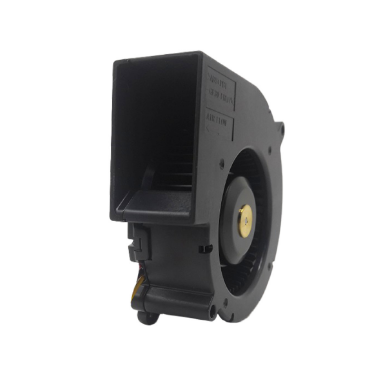
To simulate harsh coastal environments, the system underwent:
- 180+ days of continuous salt-fog testing
- 24/7 operation without interruption
- Zero measurable performance degradation
This test validated the fan's resistance to one of the most aggressive corrosion conditions.
The fan demonstrated:
- 100,000 hours expected lifespan at 60°C
- Stable airflow and pressure performance over time
- Minimal degradation even under sustained thermal stress
For comparison, conventional fans typically degrade significantly under such conditions.
With the new IP68 cooling solution:
- Fan replacement cycles were significantly extended
- On-site service interventions dropped dramatically
- Maintenance planning became more predictable
The client achieved:
- Reduced labor and replacement costs
- Less downtime for EV charging stations
- Improved ROI across large-scale deployments
Most importantly:
- Charging stations maintained stable operation
- Customer satisfaction improved due to reduced outages
- The client strengthened their market competitiveness
From an engineering and market perspective, this case highlights a broader trend:
In industries like:
- EV infrastructure
- Telecommunications
- Industrial automation
Cooling systems directly impact:
- Equipment lifespan
- Energy efficiency
- Operational continuity
Based on this project, three factors are critical:
- Ingress protection (IP rating) must match real-world conditions
- Material selection should resist corrosion and thermal stress
- Structural design must prevent both water and particulate intrusion
Companies that overlook these factors often face hidden costs later.
As a manufacturer with our own brand CAPITAL and a core distributor of SANYO DENKI, we bring:
- Proven experience serving global leaders like Huawei, ZTE, and HYTERA
- Deep expertise in DC fans, AC fans, blowers, radiators, and filters
- Customized thermal solutions tailored to specific industry challenges
- Strong focus on reliability, certification, and long-term performance
This combination allows us to deliver not just components, but complete cooling strategies.
This case demonstrates that investing in a high-quality IP68 cooling fan solution is not just about durability—it's about ensuring the long-term success of EV infrastructure and smart manufacturing systems.
By replacing failure-prone standard fans with a robust, engineered solution, the client transformed their operational reliability, reduced maintenance costs, and future-proofed their deployment.
For companies operating in extreme environments, the lesson is clear:
Cooling system design should be treated as a critical engineering decision, not an afterthought.


