From idea to market-ready product, our NPI solutions make every stage easier, faster. Discover How We Help
Help Center

Views: 299 Author: Capital Technology Publish Time: 2026-07-11 Origin: Site
Content Menu
● What Is an Air Circulator vs a Fan?
>> Air Circulator: Whole‑Room Airflow, Not Just a Breeze
>> Traditional Fan: Directed Personal Cooling
● How Do Air Circulators and Fans Work?
>> The Physics of Feeling Cooler
>> Air Movement Patterns: Directed Stream vs Vortex Loop
● Key Differences: Air Circulator vs Fan
● Use Cases: When to Choose an Air Circulator vs a Fan
>> Home and Office Environments
>> Industrial, Telecom, and Electronics Applications
● DC Fan vs AC Fan: Why It Matters in the Air Circulator vs Fan Discussion
>> DC Fans: High Efficiency, Low Noise, Smart Control
>> AC Fans: Robust, Simple, Cost‑Effective
● How Professional Cooling Design Combines Air Circulators and Fans
● Practical Selection Guide: Which One Should You Buy?
>> Step‑by‑Step Decision Framework
● Call to Action: Partner with an Expert Cooling Solutions Manufacturer
● FAQs
>> 1. Is an air circulator always better than a traditional fan?
>> 2. Can I use an air circulator without air conditioning?
>> 3. When should I choose DC fans instead of AC fans?
>> 4. Do air circulators help reduce energy bills?
>> 5. How should OEMs integrate fans into their products?
As someone who has spent years helping OEMs and telecom manufacturers solve real thermal challenges, I can tell you that choosing between an air circulator and a traditional fan is not just a comfort question—it's a system design decision that affects energy efficiency, equipment reliability, and user experience. In this guide, I'll walk you through the differences, use cases, and selection criteria from both a professional electronics‑cooling perspective and a practical everyday user angle, while also connecting them to DC and AC fan technologies that Capital Technology Co., Limited specializes in. [wigglewires]
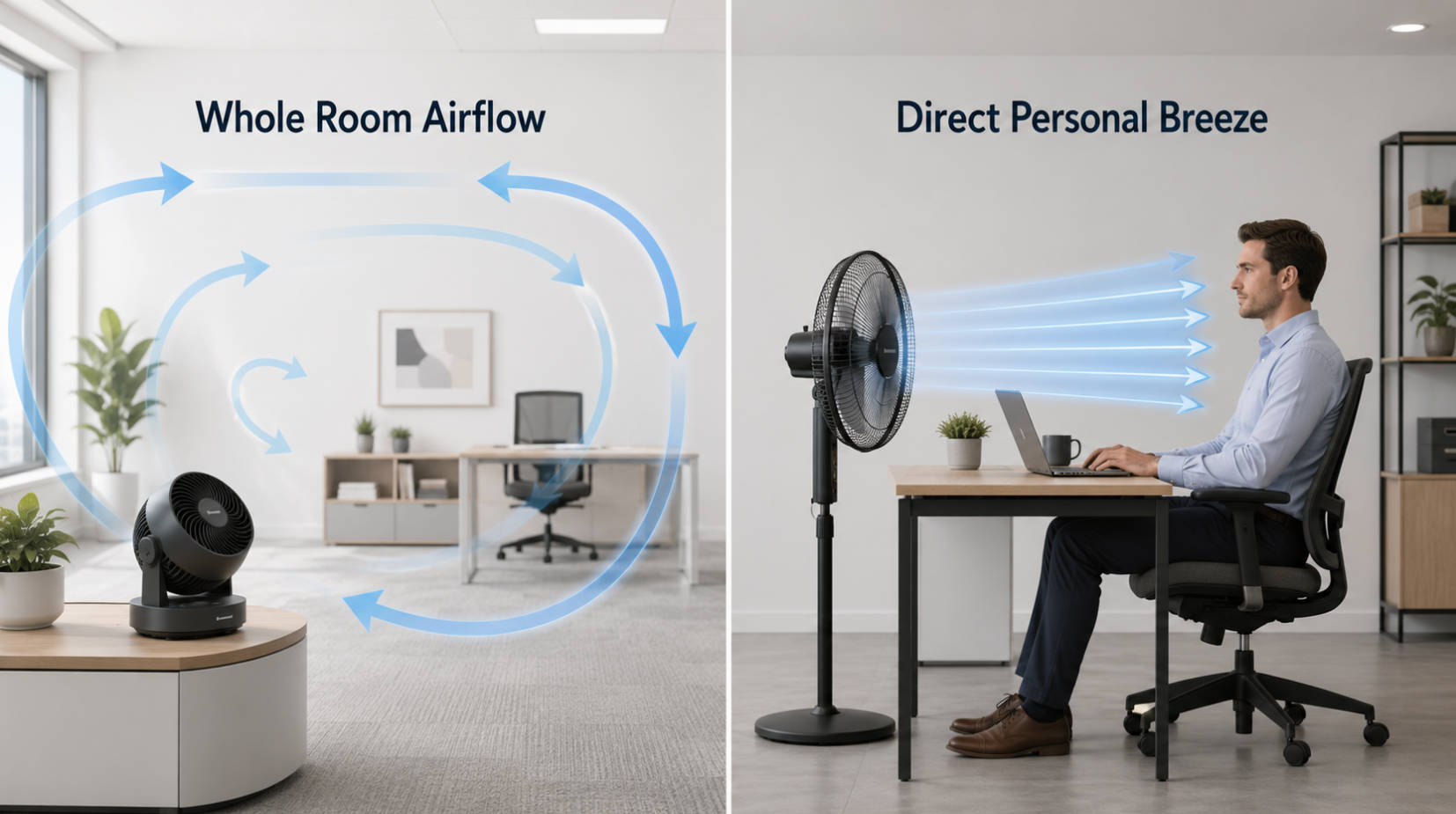
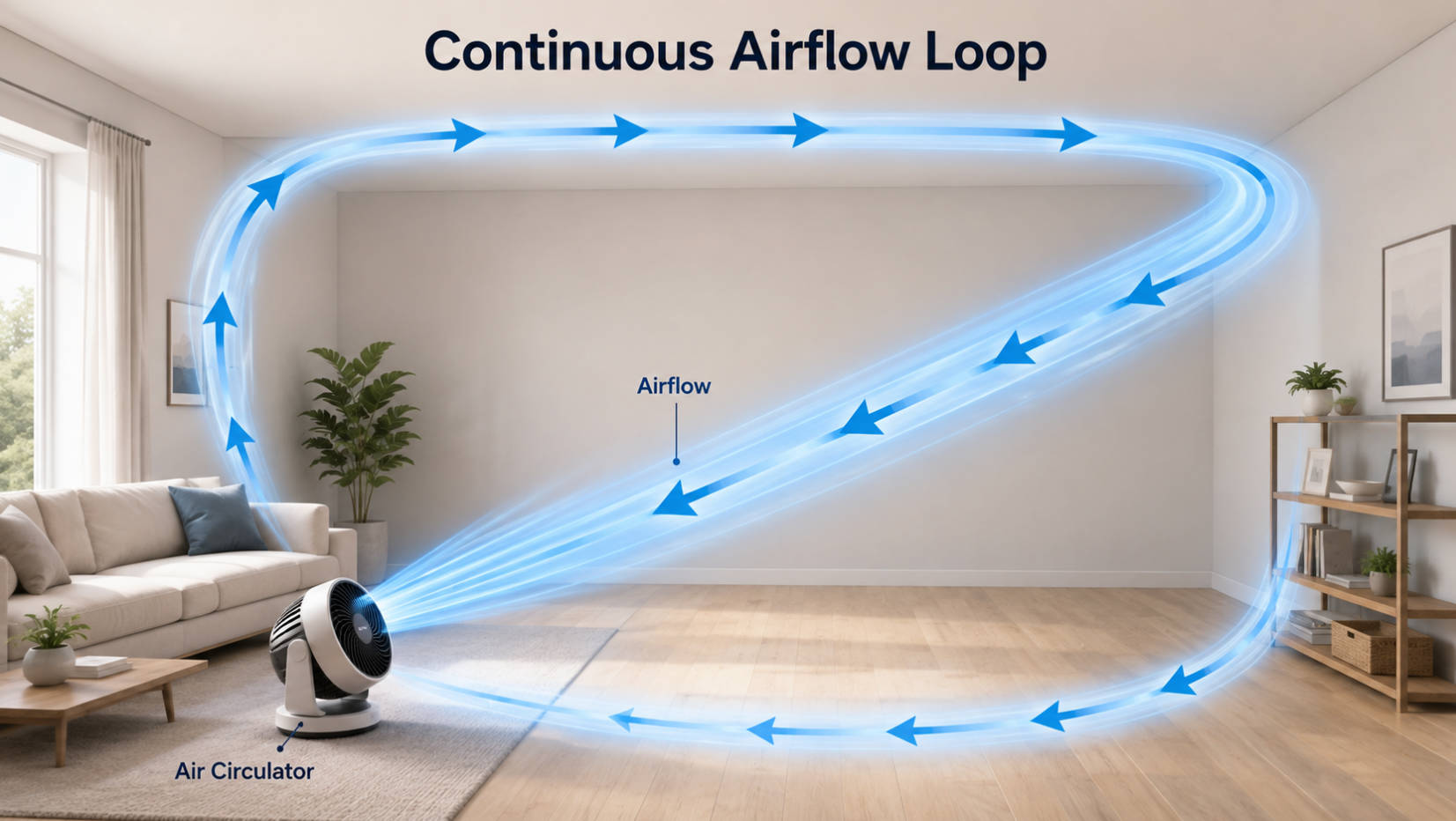
An air circulator is a type of fan engineered to move air through an entire space, creating a continuous airflow loop that bounces off walls, ceilings, and furniture before returning to the unit. Instead of delivering a strong breeze at one point, it builds a stable air pattern that helps equalize temperature and improve ventilation across the room. [techradar]
Key characteristics of air circulators: [vornado.com]
- Whole‑room circulation rather than point cooling.
- Often stationary; they don't need to oscillate to be effective.
- Work exceptionally well with air conditioning or heating to distribute conditioned air.
- Can support year‑round comfort: cooling in summer, mixing warm air in winter. [dimplex.com]
A traditional fan (pedestal, box, tower, desk fan, ceiling fan) focuses on direct, targeted airflow. It moves a stream of air along a narrow path, which feels instantly cooling when you sit in front of it, but has limited impact on the room's overall temperature. [wigglewires]
Key characteristics of traditional fans: [techradar]
- Direct, localized breeze that boosts sweat evaporation on your skin.
- Oscillation increases coverage but still favors specific zones.
- Excellent for personal comfort or spot cooling.
- Their cooling effect drops quickly as you move out of the airflow path.
From a thermal‑management perspective, neither device actually *lowers* ambient temperature by itself; they change how your body loses heat. [wigglewires]
- Fans: The moving air increases convective heat transfer and accelerates sweat evaporation on your skin, so you *feel* cooler even if the room temperature is unchanged. [techradar]
- Air circulators: By creating continuous airflow loops, they mix pockets of warm and cool air, reduce stratification, and can help your HVAC system reach setpoint temperatures more evenly and efficiently. [dimplex.com]
This distinction is critical in high‑density electronics environments—such as telecom base stations or network equipment—where uneven temperature can lead to hot spots and premature component failure. [parker]
- Traditional fan pattern:
- Narrow, directed stream moving in a straight line from the fan blades to your body or a specific area. [wigglewires]
- Oscillation widens coverage, but airflow remains intermittent and local.
- Air circulator pattern:
- High‑velocity column of air through a tight spiral grill, designed to form a jet that travels, hits surfaces, and rebounds to create a circular room‑wide flow. [vornado.com]
- The device often remains stationary, relying on aerodynamics rather than mechanical motion to distribute air.
Below is a concise overview to support fast decision‑making for buyers and engineers:
| Aspect | Air Circulator | Traditional Fan |
|---|---|---|
| Primary function | Whole‑room air circulation dimplex.com | Direct personal cooling techradar |
| Airflow pattern | High‑velocity vortex/loop vornado.com | Narrow directed stream techradar |
| Best use with AC/heating | Excellent at distributing conditioned air dimplex.com | Limited impact on overall room temperature techradar |
| Coverage | Room‑wide (can be placed in a corner) vornado.com | Local (user needs to be in airflow path) techradar |
| Year‑round use | Cooling, heating support, ventilation dimplex.com | Mostly summer cooling techradar |
| Noise perception | Often designed for continuous operation dimplex.com | Wide range from quiet to industrial white noise vornado.com |
| Typical applications | Living rooms, offices, workshops, server areas dimplex.com | Bedrooms, desks, spot cooling, outdoor use techradar |
Choose an air circulator if: [dimplex.com]
- You want even temperature across the entire room, not just a cool spot.
- You're using air conditioning or heating and need better distribution.
- Your space has thermal stratification (ceiling hot, floor cold) and you want a more consistent comfort level. [vornado.com]
Choose a traditional fan if: [techradar]
- You mainly care about personal comfort at a desk or sofa.
- You need a device that's easy to place near specific users or equipment.
- You plan to use it outdoors, where circulator airflow patterns can't form effectively. [youtube]
From a manufacturing and electronics‑cooling standpoint, the choice becomes more strategic:
- Air circulators are valuable for:
- Production halls where operators and machines need consistent airflow.
- Large spaces with multiple heat sources (e.g., SMT lines, test labs).
- Supporting central HVAC to reduce localized hot zones and improve reliability. [electronics-cooling]
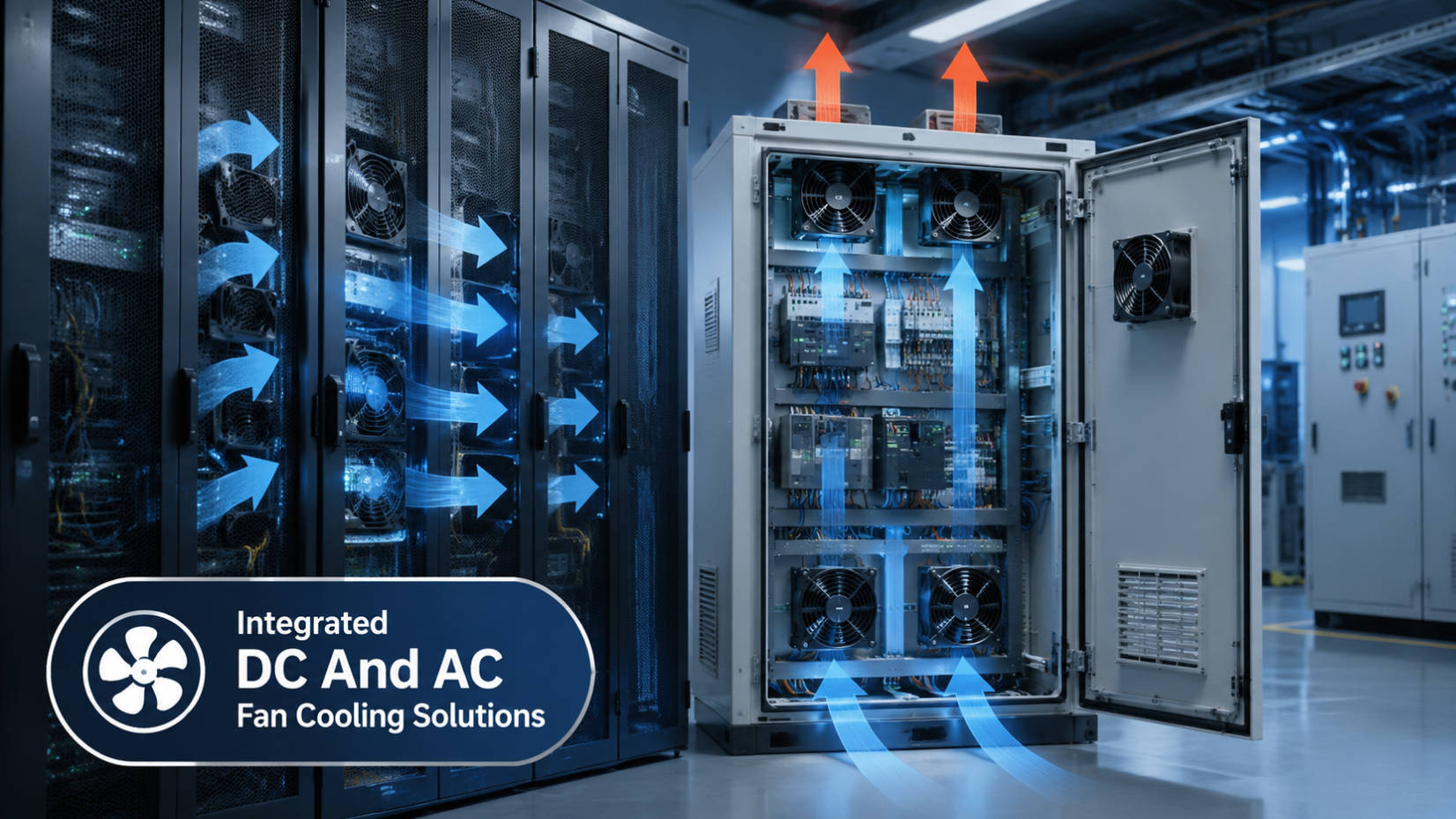
- Fans (DC and AC types) are critical for:
- Targeted cooling of components, boards, power supplies, and enclosures.
- 19‑inch rack cabinets, base stations, and radio units.
- OEM products that integrate fans as internal thermal management elements. [electronics-cooling]
This is exactly where a dedicated thermal solutions manufacturer like Capital Technology Co., Limited, with its CAPTIAL brand and role as SANYO DENKI's chief agent, adds value: bridging room‑level airflow strategies with carefully selected DC and AC fan modules for equipment‑level cooling.
While "air circulator vs fan" focuses on airflow patterns, DC fan vs AC fan focuses on the motor technology behind these devices, which directly affects efficiency, noise, and control. [spanr]
Modern DC fans typically offer: [nnio]
- 50–70% lower energy usage compared with equivalent AC fans at similar airflow. [spanr]
- Much quieter operation due to electronic commutation and smoother torque. [nnio]
- Fine‑grained speed control, PWM/voltage control, and easy integration with smart systems and IoT. [spanr]
This makes DC fans ideal for:
- Telecom equipment from brands like ZTE, HUAWEI, HYTERA, where reliability and quiet operation are essential.
- High‑density electronics and servers where energy cost and acoustic performance are critical. [parker]
- Premium air circulators and room fans that aim at "whole‑room comfort" with industrial‑grade performance.

AC fans still play a vital role: [dlgelectrical.com]
- Simple connection directly to mains power.
- Proven durability in industrial environments.
- Ideal for large, rugged applications where motor hum is acceptable and airflow volume matters more than precision noise control. [spanr]
For OEM/ODM customers, this means:
- AC fans are often favored for industrial cabinets, power systems, and outdoor enclosures.
- DC fans are preferred for indoor telecom, IT equipment, and smart consumer devices.
Drawing on industry practices in electronics cooling, the most reliable systems rarely rely on a single device type. Instead, engineers design multi‑layer thermal strategies: [circuitcellar]
1. Macro‑level airflow
- Use air circulators and HVAC to keep ambient temperature stable across rooms, workshops, or data halls.
- Prevent large‑scale stratification and dead zones that can stress equipment. [electronics-cooling]
2. Micro‑level cooling
- Integrate DC or AC fans directly into devices: routers, base stations, PA modules, power supplies.
- Design airflow paths that move air over heat sinks, high‑power components, and thermal bottlenecks. [electronics-cooling]
3. Control and monitoring
- Combine temperature sensors, fan speed control, and alarms to adapt cooling to real loads.
- Use DC fans for precise control and acoustic optimization where needed. [nnio]
For global clients in communications and high‑end electronics, suppliers like Capital Technology Co., Limited provide both component‑level fans and application‑level guidance, leveraging experience with brands such as SANYO DENKI to match fan technology to the customer's cooling architecture.
1. Define your primary goal
- Personal cooling only → choose a traditional fan.
- Whole‑room comfort and HVAC efficiency → choose an air circulator. [dimplex.com]
2. Check your environment
- Small bedroom or desk: desk/tower fan is often enough. [techradar]
- Large living room, open office, or workshop: air circulator significantly improves comfort and energy use. [vornado.com]
3. Consider noise and energy
- Need quiet continuous operation → prioritize devices using DC fans or low‑noise designs. [nnio]
- Industrial or noisy environments → AC fans may be perfectly acceptable and more cost‑effective. [dlgelectrical.com]
4. For equipment designers (OEM/ODM)
- Room‑level airflow: think air circulators + HVAC.
- Product‑level cooling: specify appropriate DC or AC fans based on power, noise, and control requirements. [parker]
If you're evaluating air circulators, DC fans, or AC fans not just for home use but for telecom, industrial, or OEM applications, working with a specialist matters.
As a source‑manufacturer focused on DC fan, AC fan and comprehensive thermal solutions, Capital Technology Co., Limited (CAPITAL) can help you:
- Select the right combination of air circulators and DC/AC fans for your environment and product line.
- Design customized cooling modules and fan assemblies for communication, industrial, and high‑end electronic systems.
- Leverage SANYO DENKI‑grade technology and reliability through our role as chief agent, already trusted by brands like ZTE, HUAWEI, HYTERA.
CTA:
"Planning a new telecom cabinet, industrial controller, or smart device and need a reliable cooling solution? Contact CAPITAL today to discuss DC fan, AC fan and air‑circulation options tailored to your application."
No. An air circulator is better when you need whole‑room air distribution or want to boost the efficiency of air conditioning and heating. A traditional fan is more effective for direct, personal cooling, especially in small spaces or outdoor use. [dimplex.com]
Yes. Even without AC, an air circulator can move cooler outdoor air from a window through the room and improve ventilation, reducing stuffiness and temperature differences. However, the perceived cooling is gentler than sitting directly in front of a powerful fan. [techradar]
Choose DC fans when you need higher efficiency, quieter operation, and precise speed control, such as in telecom equipment, servers, and high‑end consumer products. Choose AC fans when robustness, simplicity, and cost are more important than acoustic performance, e.g., industrial cabinets, outdoor units. [dlgelectrical.com]
They can. By evenly distributing cool or warm air, air circulators help HVAC systems reach setpoint more efficiently and reduce hot/cold spots, which can lower overall energy usage. Actual savings depend on your building, insulation, and usage patterns. [parker]
OEMs should start from a thermal design perspective: map heat sources, define airflow paths, and then specify DC or AC fans that meet required airflow, pressure, noise, and control targets. Partnering with a specialist manufacturer like CAPITAL simplifies fan selection, testing, and long‑term reliability assurance. [circuitcellar]
1. TechRadar – *Air circulator vs fan: what's the difference, and which one should you buy?*
[https://www.techradar.com/home/air-quality/air-circulator-vs-fan] [techradar]
2. Longwell – *Air Circulator vs Fan: Which One Cools Better?*
[https://www.longwellfans.com/air-circulator-vs-fan/] [wigglewires]
3. Dimplex – *Air Circulators vs traditional fans – How are they different?*
[https://www.dimplex.com.au/en-au/resources/education/air-circulators-vs-traditional-fans-how-are-they-different] [dimplex.com]
4. Vornado Australia – *4 Reasons Why Air Circulators Are Better Than Fans*
[https://vornado.com.au/blogs/news/4-reasons-why-air-circulators-are-better-than-fans] [vornado.com]
5. Spanr – *DC vs AC Motor Fans (2026): Efficiency, Noise, and Controls*
[https://www.spanr.ai/guides/fan/dc-motor-vs-ac-motor-fan/] [spanr]
6. NNIO – *DC Fan vs AC Fan: The Practical Choice for Singapore Homes*
[https://www.nnio.asia/blogs/nnio-living/dc-fan-vs-ac-fan-the-practical-choice-for-singapore-homes] [nnio]
7. Electronics Cooling – *Cooling Technology Options & Advanced Cooling for Power Electronics*
[https://www.electronics-cooling.com] [electronics-cooling]
8. Circuit Cellar – *Cooling Electronic Systems*
[https://circuitcellar.com/research-design-hub/cooling-electronic-systems/] [circuitcellar]


