From idea to market-ready product, our NPI solutions make every stage easier, faster. Discover How We Help
Help Center

Views: 0 Author: Site Editor Publish Time: 2026-03-04 Origin: Site
Sanyo Denki's temperature-resistant fans are renowned for their exceptional reliability, capable of stable operation in extreme temperature environments and providing continuous heat dissipation for critical equipment.
Core Advantages
✔ Extremely Wide Operating Temperature Range: This is the most critical advantage. Designed to handle extreme environments, these fans typically operate stably within a range of -40°C to +85°C or even wider.
✔ High-Temperature Materials and Lubrication Systems: To prevent aging and failure in extreme hot and cold environments, Sanyo's temperature-resistant fans use special high-temperature motor materials and dedicated lubrication systems. This ensures the motor and bearings operate normally under extreme high and low temperatures.
✔ High Reliability and Long Service Life: Based on Sanyo's consistent high-reliability design, these fans guarantee long-term stable performance and an extended service life even under harsh conditions with drastic temperature changes, reducing equipment maintenance and downtime risks.
✔ Wide Range of Applications: Thanks to their excellent temperature resistance, they adapt to various harsh industrial environments, ensuring equipment operates safely in high heat or extreme cold.
Application Cases
Although the search materials do not provide independent application cases specifically for "temperature-resistant fans," based on their characteristics, they play a key role in the following fields:
☢ Refrigeration Equipment: In ultra-low temperature cold storage and refrigerated transport equipment, temperature-resistant fans can start and work continuously in extremely low ambient temperatures, ensuring the efficiency of the refrigeration system.
☢ Industrial High-Temperature Equipment: Applied in industrial furnaces, high-temperature drying equipment, and high-temperature lighting equipment, the fans can resist the high temperature radiated by the equipment, ensuring they and surrounding components do not overheat and get damaged.
☢ Outdoor Extreme Environment Equipment: Communication base stations and power control cabinets deployed outdoors face scorching heat in summer and severe cold in winter. Temperature-resistant fans ensure these devices operate stably in any season.
Sanyo Temperature-Resistant Fan Selection Guide
This guide helps you quickly lock onto the most suitable model based on specific environmental parameters such as temperature, dust, and humidity.
Representative temperature-resistant fan models from the San Ace series are selected, covering different sizes and protection levels.
| Model | Size (mm) | Operating Temperature Range | Core Features | Applicable Scenarios |
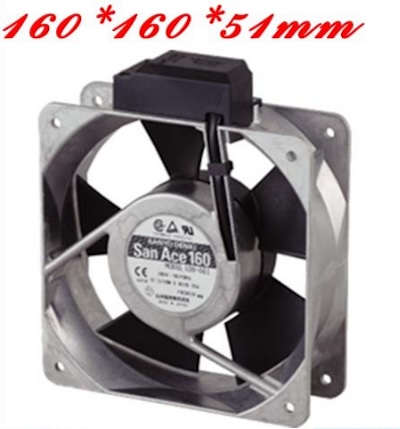
San Ace 160 ST1-109-641-2 | 160×160×51 | -10℃ ~ +60℃ | Super high air volume (4300.4 CFM) Low-speed detection sensor | Large cabinets, high-power industrial equipment |
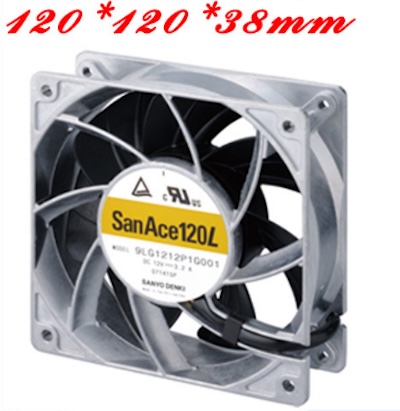
San Ace 120 9G1212M101 | 120×120×38 | 20℃ ~ +70℃ | Multiple voltage options (12/24/48V) High cost performance, 40,000 hours lifespan | Digital screen advertising, general industrial equipment |
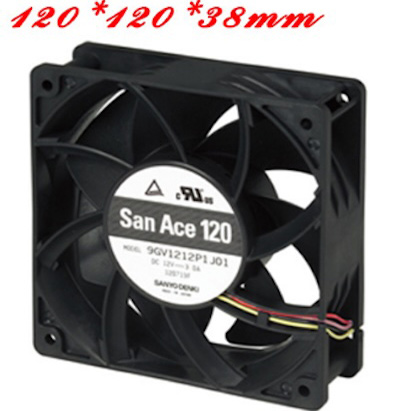
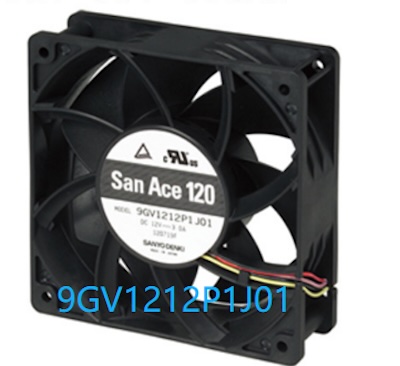
San Ace 120 (High Pressure) 9GV1212P1J01 | 120×120×38 | -20℃ ~ +70℃ | High speed (6400 RPM) High air volume (224 CFM) | Equipment with large internal space and multiple heat sources |
San Ace 120 (Waterproof) 9WPA1212H4001 | 120×120×25 | -20℃ ~ +70℃ | IP68 protection level Dustproof and waterproof, 40,000 hours lifespan | Outdoor harsh environments, industrial sites requiring washing |
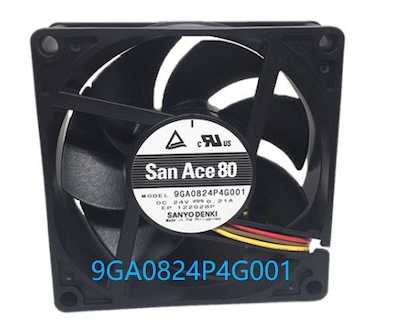
San Ace 80 9GA0824P4G001 | 80×80×25 | -20℃ ~ +70℃ | PWM fast speed regulation (0.3s response) Quiet design | Medical equipment, laboratory instruments, office equipment |
Detailed Selection Suggestions and Strategies
When selecting a specific temperature-resistant fan, it is recommended to screen according to the following logic to ensure "using the best resources where they are most needed."
Step 1: Define the Scope Based on Ambient Temperature
First, clarify the minimum and maximum ambient temperatures your equipment faces.
① Stringent Standard (-40°C ~ 85°C): If your equipment needs to work in extremely cold (e.g., outdoor winter in the north) or hot (e.g., high-temperature workshops) environments, you should choose a fan with a wide temperature range. Although some models in the above table have an upper limit of 70℃, Sanyo has industrial-grade series specifically designed for -40℃~85℃ (such as some San Ace 172 series or custom models). Pay special attention to models marked as "wide temperature" or "industrial grade."
② Stringent Standard (-40°C ~ 85°C): If your equipment needs to work in extremely cold (e.g., outdoor winter in the north) or hot (e.g., high-temperature workshops) environments, you should choose a fan with a wide temperature range. Although some models in the above table have an upper limit of 70℃, Sanyo has industrial-grade series specifically designed for -40℃~85℃ (such as some San Ace 172 series or custom models). Pay special attention to models marked as "wide temperature" or "industrial grade."
Step 2: Select the Protection Level Based on the Ambient Medium
Temperature resistance is just the foundation; dust and moisture in the environment also affect fan lifespan.
① Dusty/Humid Environments: If the equipment is installed outdoors or in dusty factories, it is strongly recommended to choose a model with an IP protection level. For example, 9WPA1212H4001 has an IP68 protection level, completely dustproof and protected against long-term immersion, making it very suitable for harsh environments.
② Clean Environments: If it is in a data center, medical equipment, or laboratory, focus mainly on quiet operation and precise temperature control. Prioritize models that support PWM speed regulation and have low noise, such as 9GA0824P4G001.
Step 3: Match Performance Based on Heat Dissipation Needs
① High Air Volume Needs: If the equipment generates a huge amount of heat and has an open space, choose a model with high speed and high air volume, such as 9GV1212P1J01 (6400 RPM).
② High Static Pressure Needs: If there are many obstacles in the air duct, such as heat sink fins or filters, choose a fan with higher static pressure parameters to ensure the airflow can penetrate the resistance.
Step 4: Consider Signal Feedback and Monitoring
For critical mission equipment, it is recommended to choose a fan with sensors.
☛ Low-Speed Detection/Alarm Signals: For example, ST1-109-641-20 is equipped with a low-speed sensor, and 9G1212M101 can be optionally equipped with FG (speed signal) and RD (alarm signal). This allows you to monitor the fan status in real-time, preventing equipment overheating and shutdown due to fan stoppage.