From idea to market-ready product, our NPI solutions make every stage easier, faster. Discover How We Help
Help Center

Views: 222 Author: Capital Technology Publish Time: 2026-06-06 Origin: Site
Content Menu
● DC Fan vs AC Fan: Key Technical Differences
>> Power Consumption and Efficiency
>> Speed Control and System Intelligence
>> Integration and Power Architecture
● When DC Fans Are the Better Choice
● When AC Fans Still Make Sense
● DC vs AC Fan: Practical Comparison Table
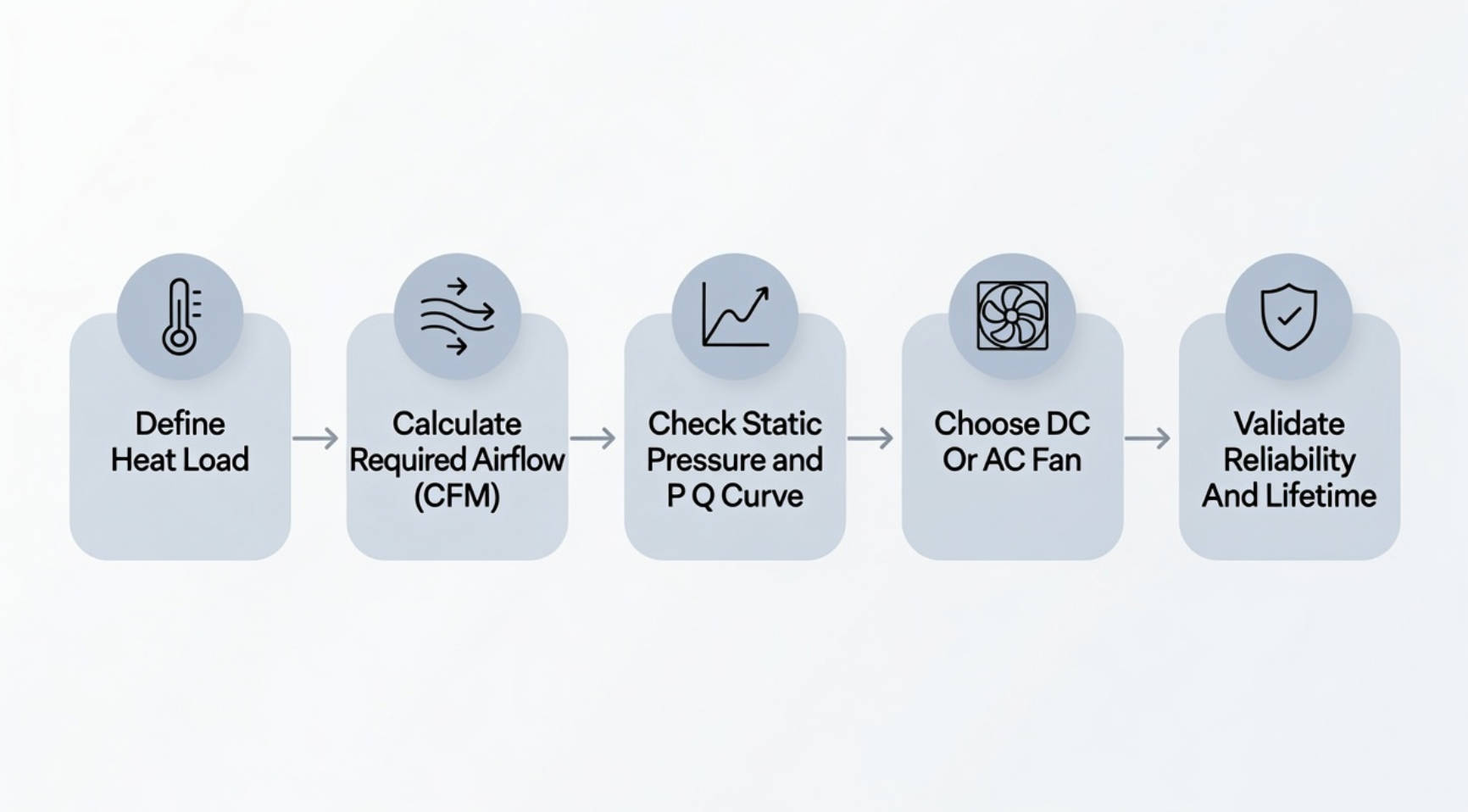
● How Professional OEMs Choose: A Step-by-Step Selection Framework
>> Step 1: Define the Thermal Challenge
>> Step 2: Match Airflow and Static Pressure
>> Step 3: Decide on DC vs AC Architecture
>> Step 4: Evaluate Reliability and Lifetime
● Why Work With a Specialist Manufacturer Like CAPITAL
● How a Telecom OEM Might Choose DC vs AC
● DC vs AC Fan: Quick Checklist for Engineers
● Call to Action: Get a Tailored DC vs AC Fan Recommendation
>> 1. How do I know if I should use a DC fan or AC fan?
>> 2. Are DC fans always more efficient than AC fans?
>> 3. Can I replace an AC fan with a DC fan in existing equipment?
>> 4. What data should I request from a fan supplier?
>> 5. Why do telecom and networking companies often prefer DC fans?
Choosing between a DC fan and an AC fan is no longer a simple "price vs availability" decision. From my experience working with electronics manufacturers and telecom OEMs, the wrong fan choice quietly erodes reliability, inflates energy costs, and complicates future upgrades — long before anyone notices the part number on the BOM. [sofasco]
In this guide, I'll walk you through the real-world differences between DC fans and AC fans, how leading brands and OEMs think about selection, and where a specialist manufacturer like Capital Technology Co., Limited (CAPITAL) adds value as both an original cooling solution provider and chief agent of SANYO DENKI. [en.szcpt]

A DC fan is a cooling fan driven by direct current, where the current flows in one direction and is usually supplied by a low-voltage DC rail such as 5 V, 12 V, 24 V, or 48 V. [jlcmc]
DC fans commonly use brushless DC motors with integrated electronics that commutate the motor and allow for features such as speed control, tachometer feedback, and soft start. [electronics.alibaba]
An AC fan is powered by alternating current, typically 110–120 V or 220–240 V mains, where the current reverses direction periodically. [ystechusa]
AC fans are often built around induction motors or shaded-pole motors, offering simple construction, direct AC input, and long-established reliability in industrial and infrastructure applications. [jlcmc]
From a design engineer's perspective, DC and AC fans differ in four critical dimensions: power, control, noise, and integration. [ystechusa]
- DC fans are typically more energy-efficient, often using significantly less power than comparable AC fans for the same airflow because of brushless motor technology and optimized electronics. [citylightssf]
- AC fans tend to draw more power and are generally less efficient, especially in smaller form factors and variable-speed scenarios. [citylightssf]
In long-lifecycle equipment such as base stations or network cabinets, this efficiency gap converts directly into total cost of ownership (TCO) savings when multiplied across thousands of units. [forum.digikey]
- DC fans support fine-grained speed control (often via PWM or voltage adjustment), enabling dynamic thermal management based on load, ambient temperature, or system policies. [electronics.alibaba]
- AC fans are typically limited to fixed speed or basic step control via external circuitry, which reduces flexibility for smart, energy-aware systems. [forum.digikey]
For modern telecom, ICT, and industrial IoT equipment, DC fans integrate more naturally with closed-loop thermal management strategies and remote monitoring. [sofasco]
- Brushless DC fans usually operate more quietly at equivalent airflow, partly due to smoother control and more efficient motor design. [citylightssf]
- AC fans, especially older designs, can be noisier at full speed, which matters in indoor cabinets, medical devices, and office networking equipment. [ystechusa]
- DC fans integrate well in systems already running on low-voltage DC rails, such as baseband units, routers, and embedded controllers. [sofasco]
- AC fans make sense where stable AC mains power is present and where redesigning the power architecture for DC rails is unjustified, such as traditional industrial enclosures or simple ventilation systems. [forum.digikey]
From what I see across telecom and electronics projects, DC cooling fans are increasingly becoming the default in compact, power-sensitive, and intelligent systems. [electronics.alibaba]
You should prioritize DC fans when:
- You need precise speed control, thermal profiling, or predictive maintenance based on fan RPM feedback. [jlcmc]
- Your system runs on DC rails (for example, telecom 48 VDC, or 12/24 VDC embedded systems). [sofasco]
- Energy efficiency, quieter operation, and long-term operating cost are important decision factors. [citylightssf]
- The application is high-reliability, such as telecommunications, medical, or industrial automation, where reputable brands publish full performance curves and lifetime data. [sanyodenki-cn]
Despite the momentum behind DC technology, AC fans remain very relevant in many industrial and infrastructure use cases. [forum.digikey]
AC fans are often the right fit when:
- You have straightforward AC mains power available and no existing DC rail. [ystechusa]
- The application is non-compact, such as large cabinets or building ventilation, where efficiency and noise are less critical than simplicity and robustness. [sofasco]
- You value proven, simple motor design and long service history in AC environments. [jlcmc]
The table below summarizes how most engineers I work with actually look at DC vs AC fans during the selection process. [electronics.alibaba]
| Aspect | DC Fan | AC Fan |
|---|---|---|
| Power source | Low-voltage direct current rails (5–48 VDC) jlcmc | Mains-level AC (110–240 VAC) jlcmc |
| Energy efficiency | Generally higher, lower power consumption for same airflow citylightssf | Typically higher power draw, lower efficiency in smaller sizes citylightssf |
| Speed control | Easy PWM/voltage control, multiple speed profiles jlcmc | Mainly fixed speed or coarse external control forum.digikey |
| Noise level | Often quieter due to smoother control and higher efficiency citylightssf | Can be noisier at full speed citylightssf |
| System integration | Ideal for smart, monitored systems with thermal control loops sofasco | Best for simple AC-powered setups forum.digikey |
| Typical applications | Telecom, servers, embedded systems, industrial electronics sofasco | Industrial cabinets, building HVAC, legacy equipment sofasco |
Working with teams that supply to brands like ZTE, Huawei, and Hytera, I see a consistent decision framework when they evaluate DC vs AC fans. [sanyodenki-cn]
Start with the heat load and your acceptable temperature rise. [forum.digikey]
- Estimate or measure heat dissipation in watts from all components. [sofasco]
- Determine maximum allowable internal temperature rise (for example, 10–20 °C above ambient). [electronics.alibaba]
- Use a sizing formula such as
CFM≈(Heat (W)×3.16)/ΔT(°C)
to estimate required airflow, then apply a margin (typically 1.5×) to account for backpressure and aging. [electronics.alibaba]
Real-world enclosures introduce backpressure due to filters, grills, and internal obstructions. [sofasco]
- Compare fan P–Q curves (airflow vs static pressure) from the manufacturer datasheet. [electronics.alibaba]
- Ensure that at your estimated system pressure, the fan still delivers at least the required CFM plus margin. [sofasco]
Only after steps 1–2 do experienced teams lock in DC or AC. [forum.digikey]
- If the system already relies on low-voltage DC rails and needs monitoring, DC fans are usually the default. [sanyodenki-cn]
- If the design is mains-driven and simplicity is key, AC fans may provide a more straightforward solution. [ystechusa]
- Look for ball-bearing or advanced bearing systems and manufacturer-published life data at relevant temperatures. [sanyodenki-cn]
- Treat "50,000 hours" claims without supporting curves as non-industrial grade. [electronics.alibaba]
From the user's perspective, one of the strongest signals you can send to your customers and stakeholders is who you choose to build your cooling system with. [en.szcpt]
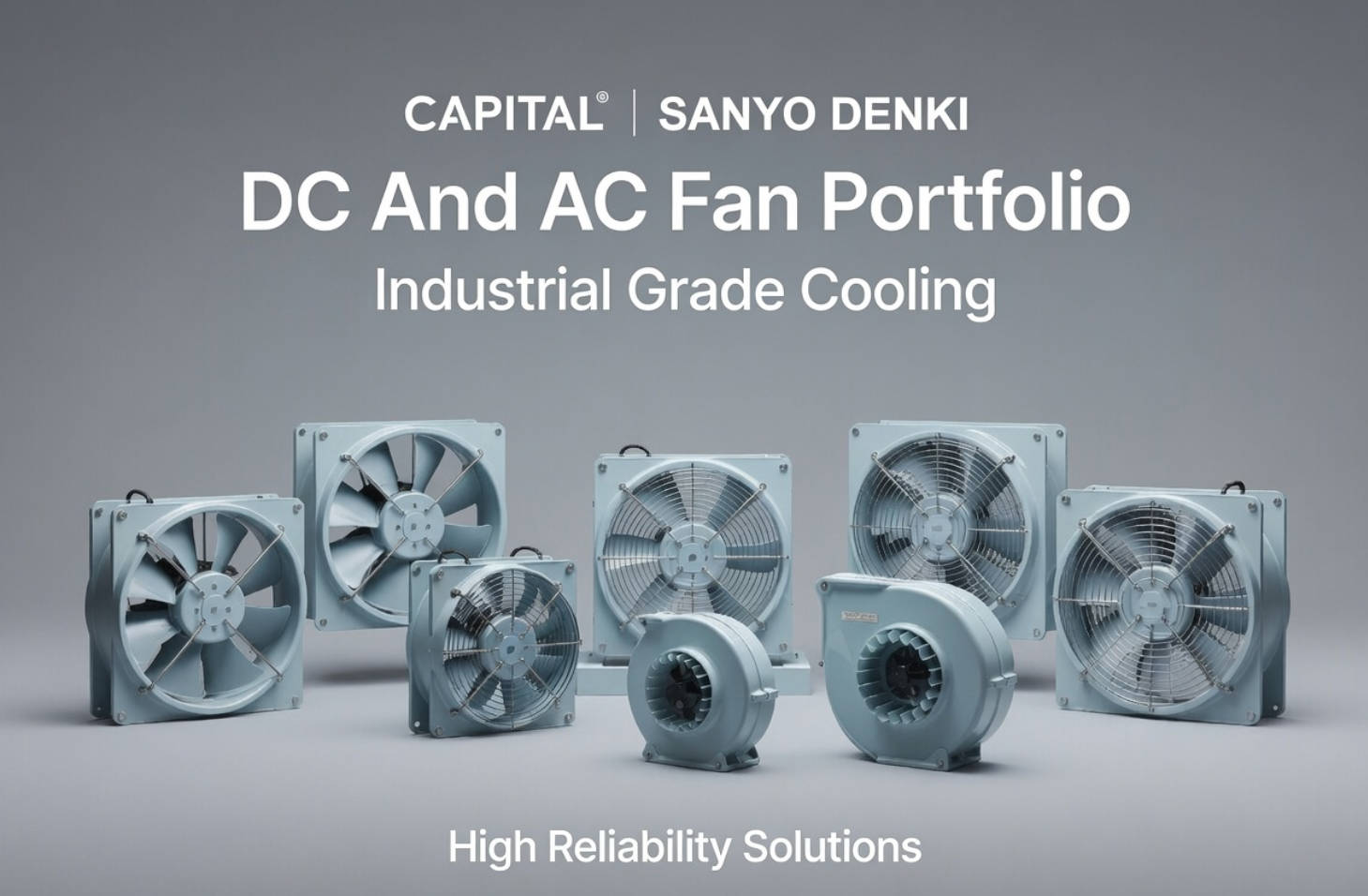
Capital Technology Co., Limited (CAPITAL) is a cooling fan manufacturer and complete thermal solution provider, serving as the chief agent of SANYO DENKI, a leading brand in the global cooling fan industry. [en.szcpt]
This matters in practice because:
- You get access to full ranges of DC and AC fans under both the CAPITAL brand and SANYO DENKI portfolio, covering standard, high-static-pressure, and specialized models. [en.szcpt]
- Global OEMs in telecom and communications rely on such suppliers to meet strict reliability, documentation, and long-term supply requirements. [sanyodenki-cn]
- You benefit from engineering support, including model selection, customization, and thermal solution consulting based on real project experience. [en.szcpt]
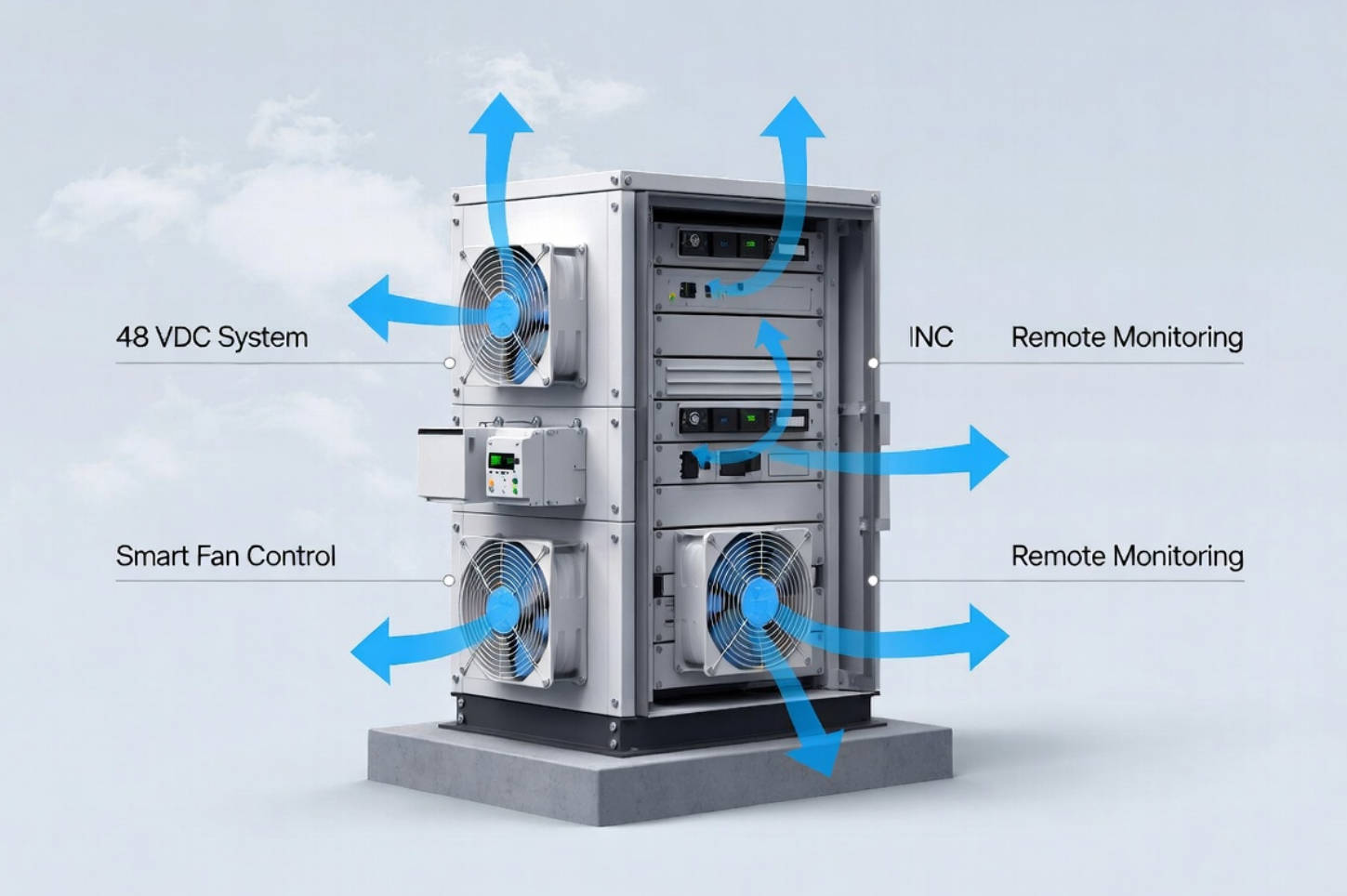
To illustrate how this plays out, consider a typical outdoor telecom base station project. [forum.digikey]
- The equipment runs on a 48 VDC power system, with strict uptime requirements and remote monitoring. [forum.digikey]
- Engineers estimate the total heat output and allowable temperature rise, then calculate required airflow using the CFM formula and validate against fan performance curves. [sofasco]
- They select high-reliability DC fans with RPM feedback and PWM control, allowing the network to intelligently ramp fan speed with load and ambient conditions. [forum.digikey]
By working with a supplier like CAPITAL/SANYO DENKI, they can access industrial-grade DC fans, detailed datasheets, and long-term support — crucial for equipment lifecycles that span 7–10 years or more. [en.szcpt]
When I advise engineering or procurement teams, I usually distill the decision into a short checklist: [sofasco]
1. Confirm power architecture: Do you have DC rails, AC mains, or both? [forum.digikey]
2. Define thermal target: How many watts of heat, and what temperature rise is acceptable? [sofasco]
3. Calculate and validate airflow using a sizing formula and fan performance curves. [electronics.alibaba]
4. Decide on control strategy: Fixed speed, staged control, or intelligent PWM with feedback? [jlcmc]
5. Check noise, lifetime, and certifications against your project requirements. [sanyodenki-cn]
6. Select a trusted brand and partner who can support you through prototyping, validation, and mass production. [en.szcpt]
If you are unsure whether DC or AC fans fit your next project, the safest next step is to talk to a thermal solutions partner who sees many designs across telecom, networking, and industrial sectors. [sanyodenki-cn]
Capital Technology Co., Limited (CAPITAL) can help you:
- Evaluate your current or planned power architecture and thermal constraints. [en.szcpt]
- Recommend DC and AC fan models across both CAPITAL and SANYO DENKI portfolios. [en.szcpt]
- Provide datasheets, performance curves, and samples to validate your design before mass production. [sanyodenki-cn]
You can reach CAPITAL through the contact information published on its official channels to discuss your specific DC vs AC fan requirements in detail. [en.szcpt]
You should start from your power architecture and control needs. If your system already uses low-voltage DC rails and you need intelligent speed control or monitoring, a DC fan is usually better. If you rely on stable AC mains and need a simple, robust solution without complex control, an AC fan can be more straightforward. [ystechusa]
In many small and medium-sized applications, DC fans are more energy-efficient and can use significantly less power for the same airflow because of improved motor technology and control. However, efficiency also depends on the specific model, quality, and operating point, so checking datasheets and performance curves is essential. [citylightssf]
It is possible, but only if your system can provide the correct DC voltage, current, and control signals, and you carefully match airflow, static pressure, and mechanical dimensions. In many retrofits, engineers work with a specialist manufacturer like CAPITAL to verify electrical compatibility and thermal performance before committing to a DC replacement. [sanyodenki-cn]
At a minimum, you should ask for datasheets, P–Q performance curves, lifetime data (L10, MTBF), and any available derating curves covering operating temperature. For critical designs, also confirm certifications, bearing type, and recommended maintenance intervals or replacement guidelines. [sanyodenki-cn]
Telecom and networking equipment typically run from DC power systems and require remote monitoring, intelligent thermal control, and high reliability over long lifecycles. DC fans support PWM control, RPM feedback, and energy-saving profiles, which align well with these requirements and are widely available from industrial-grade suppliers such as CAPITAL and SANYO DENKI. [en.szcpt]
1. City Lights. "The Complete DC Motor Ceiling Fans Guide." [https://citylightssf.com/blogs/city-lights-insights/dc-motor-ceiling-fans-guide] [citylightssf]
2. Sofasco. "Selection Guide for Electronic Cooling Fans." [https://sofasco.com/blogs/article/selection-guide-for-electronic-cooling-fans] [sofasco]
3. Capital Technology Co., Limited. "Company Profile – Cooling fan manufacturer." [https://www.en.szcpt.com/intro/1.html] [en.szcpt]
4. JLCMC. "DC Fan and AC Fan: 3 Key Differences You Should Know." [https://jlcmc.com/blog/dc-fan-and-ac-fan-3-key-differences-you-should-know] [jlcmc]
5. Digi-Key / Cooltron. "Not Sure Which Fan to Choose? Here's a Quick Guide from Cooltron." [https://forum.digikey.com/t/not-sure-which-fan-to-choose-here-s-a-quick-guide-from-cooltron/53772] [forum.digikey]
6. Y.S. Tech USA. "What's the Difference Between DC Fans & AC Fans?" [https://www.ystechusa.com/whats-the-difference-between-dc-fans-ac-fans-i-30.html] [ystechusa]
7. Alibaba Electronics Hub. "What DC Cooling Fans Do You Really Need? A Practical Guide." [https://electronics.alibaba.com/question/dc-cooling-fans-size,-voltage-noise-explained] [electronics.alibaba]
8. SANYO DENKI – San Ace Cooling Fan Supplier (China site, Capital as chief agent). [https://www.sanyodenki-cn.com] [sanyodenki-cn]


